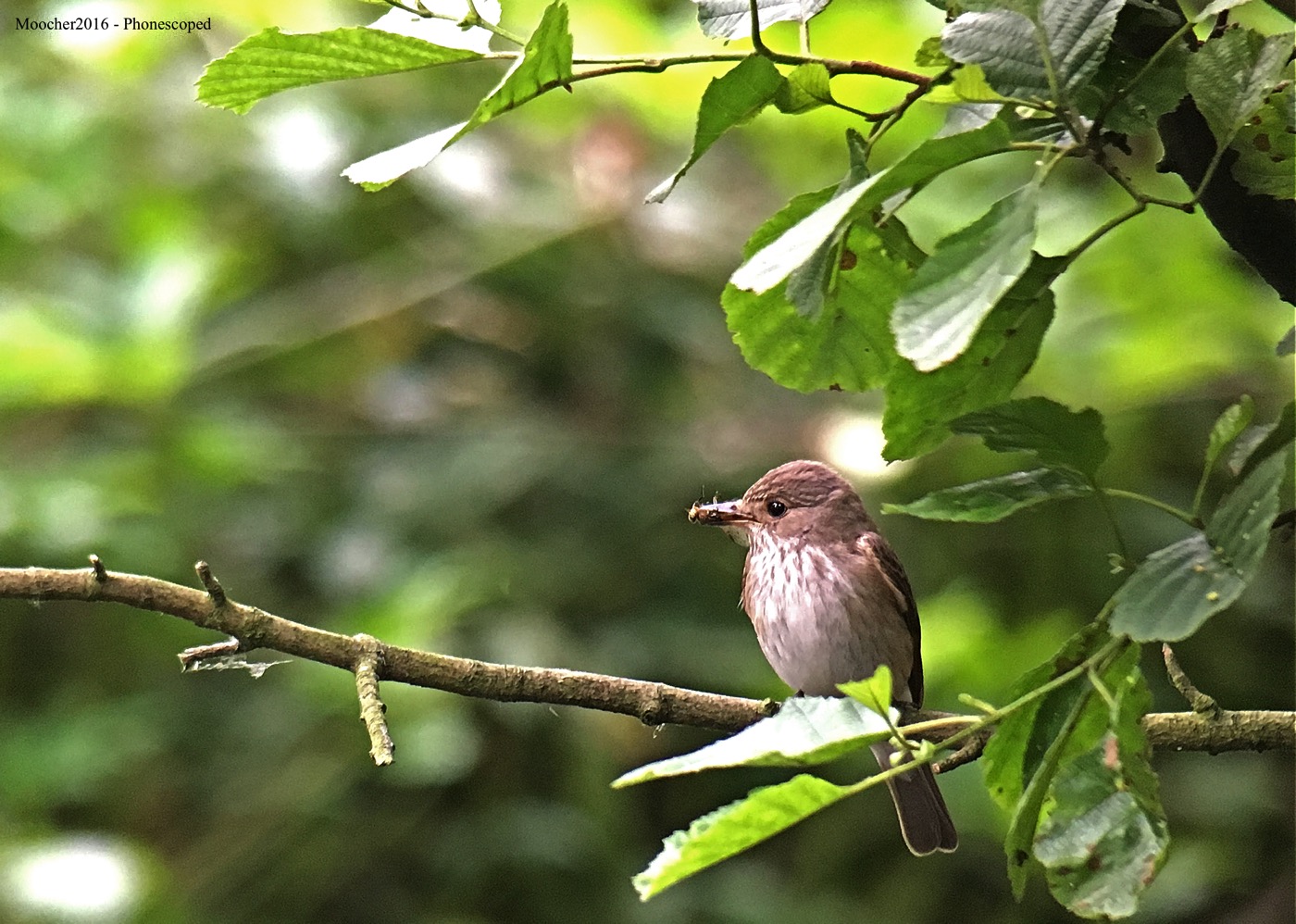
I have been watching some Spotted Flycatchers and decided to try and get some pictures of them. I have experienced conditions from raining, dull and overcast, to brief bright sunshine. I felt that they would provide a good opportunity to test my photography equipment out and see which gave me the best results. I'm pretty sure all the equipment is capable of better pictures than I can get out of them, but my ineptitude as a photographer is a constant variable thoughout these tests.
Saturday, 9 July 2016
Shoot out
Monday, 13 June 2016
Hares, Foxes and Badgers
It’s been over a month since I last posted anything on this blog. During that time, I have been putting any free moments into catching up with the local larger mammals on the patches I regularly walk. I have thought long and hard before posting these pictures as it inevitably leads to requests of “Where did you see these? I would like to see them myself.”
I decided I would share the pictures, I will not however share the whereabouts of any of the animals pictured. I hope you enjoy the photos and ask that you don’t put me in the position of refusing to share locations with you, as the way I refuse will almost certainly offend!
Hares are a real passion of mine. It always makes my day to encounter them when I’m out on my wanders and I am getting better at creeping up on them. I was worried at the beginning of the year that I had not seen many Hares on the land I walk. This is still true of areas that had a few last year but I have seen none this year. However, a couple of areas have produced the goods and I enjoy looking for the Hares in these areas. One spot has already seen the attention of two guys with running dogs, but they have now twice vacated the area quickly on my approach. They didn’t enjoy having the camera pointed at them and I have not seen them for a while. I would like to see these amazing creatures carry on and thrive in these areas.
The Foxes have been a little more difficult to track down. The first is a dog fox and one of a pair I have been watching. At first, he was hunting very frequently, obviously providing for the vixen while she was denning with cubs. Recently, I have found him occasionally laid out sunning himself, as it seems he in no longer the sole provider of food to his brood. What I believe to be his mate can now be relied upon to make an appearance if I am willing to be patient and wait for her. This regular vixen is in quite good condition and has obviously been suckling cubs. I have recently seen her hunting rabbits. Twice I have watched her successfully catch and carry off a rabbit I expect to her cubs. The cubs will be old enough now to be left for short periods and she will also now be hunting as she starts the process of weaning the cubs off her milk. Fresh caught prey will become rapidly more significant in the cubs diet now, so both parents hunting should provide for their needs in this rabbit rich environment. My view point for two of these foxes doesn’t allow for decent pictures. I’m facing the setting sun, there is too much undergrowth and bramble and they are a little distant. It’s not all about photographs though, that’s just I bonus if and when conditions allow.
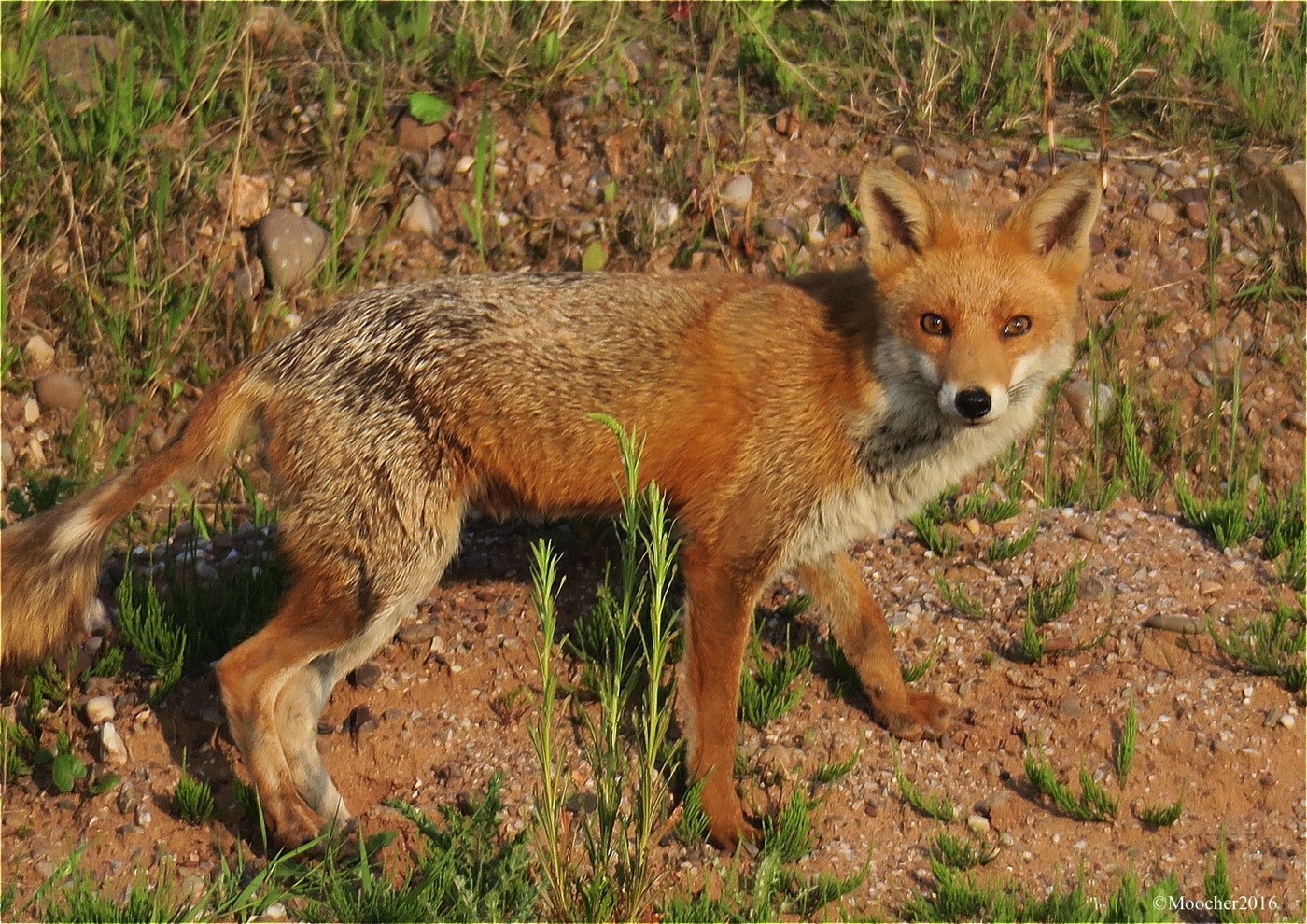
The third fox looks quite young, probably one of last years cubs. This yearling on the face of it looked in very good condition initially, but I suspect it may have a problem. Foxes do go through a heavy summer moult and some can look pretty tatty at this time of year. This youngster is almost moulted out, but i’m a little concerned by the condition of its tail. It looks like it may be suffering from the early stages of mange. I will keep a look out for this individual and see how things progress.
• I have seen this yearling again and the tail is not looking any worse. It does have a covering of fur along its whole length, so i’m hoping this is just a moult. Mange symptoms do tend to start at the tail base, but there tends to be complete hair loss in the affected area. If it hangs around, I will keep an eye on its process.
Most of my free time though has been spent hoping to see some badger cubs above ground. They just cannot resist being above ground playing once they are about 12 - 14 weeks old. I have been watching a few Setts I am aware of, and eventually my patience paid off. I was pleased to get some decent daytime pictures of three cubs occasionally accompanied by mom playing in the late afternoon sun.
To be in the close proximity of badgers as they go about their business is a real privilege and only makes my adoration of theses fascinating creatures stronger. I’m sure no-one is under any illusion about the black cloud hanging over our nations badger population in the form of the governments badger cull. This ill thought out policy has failed on every level, including failing dismally to meet their own already low standards of what constitutes a humane death for the shooting of a free roaming badger. With absolutely no solid scientific evidence to prove badgers spread Bovine TB to cattle, and cases of Bovine TB actually rising in some cull areas, the government still seem hell bent own pursuing this abhorrent scheme.
The Badger Trust is fighting hard to change the mind of this government and bring this failing policy to an end. Any support that can be given to the Badger Trust is money being put to good use to save our badgers.
I listened to Dominic Dyer, the CEO of the Badger Trust speak recently at a Badger Cull protest rally I attended in Leicester city centre. Of all the things he said, this one quote struck a chord with me, as it must have done with others as it appeared a lot on social media.

Check out the Badger Trust’s website for yourself and make your own mind up. If you agree with what they stand for, try and make a donation.
Click the banner to check out the Badger Trust Website.
Saturday, 30 April 2016
Mixing it up
It's been a week of messing about with different techniques to capture a few record shots of the local wildlife that I've been lucky enough to point a camera at.
It all started after work on Monday with a report of a Ring Ouzel! I rushed home from work for a change of clothes and to grab my binoculars and scope and was off. I located the Ring Ouzel, and the farmer upon whose land it was feeding gave me permission to cross his land to get a better view.
It remained distant and I didn't want to move it on by chasing it about so decided on using my scope and phone to capture a record shot.
Phonescoping again proving its value as a tool to keep in your armory for capturing pictures of a distant subject.
After enjoying the Phonescoping it encouraged me to set up my old Nikon P300 point and shoot camera and "Digidapter" made by Paul Sayegh. I decided to have a go capturing some images with my dedicated Digiscoping kit. I have been taking my scope out with me more often to scan the fields and hedgerows and thought it would make a change to use the little camera. If you are taking your scope, it’s nice to have an easy method of capturing what you are viewing if required.
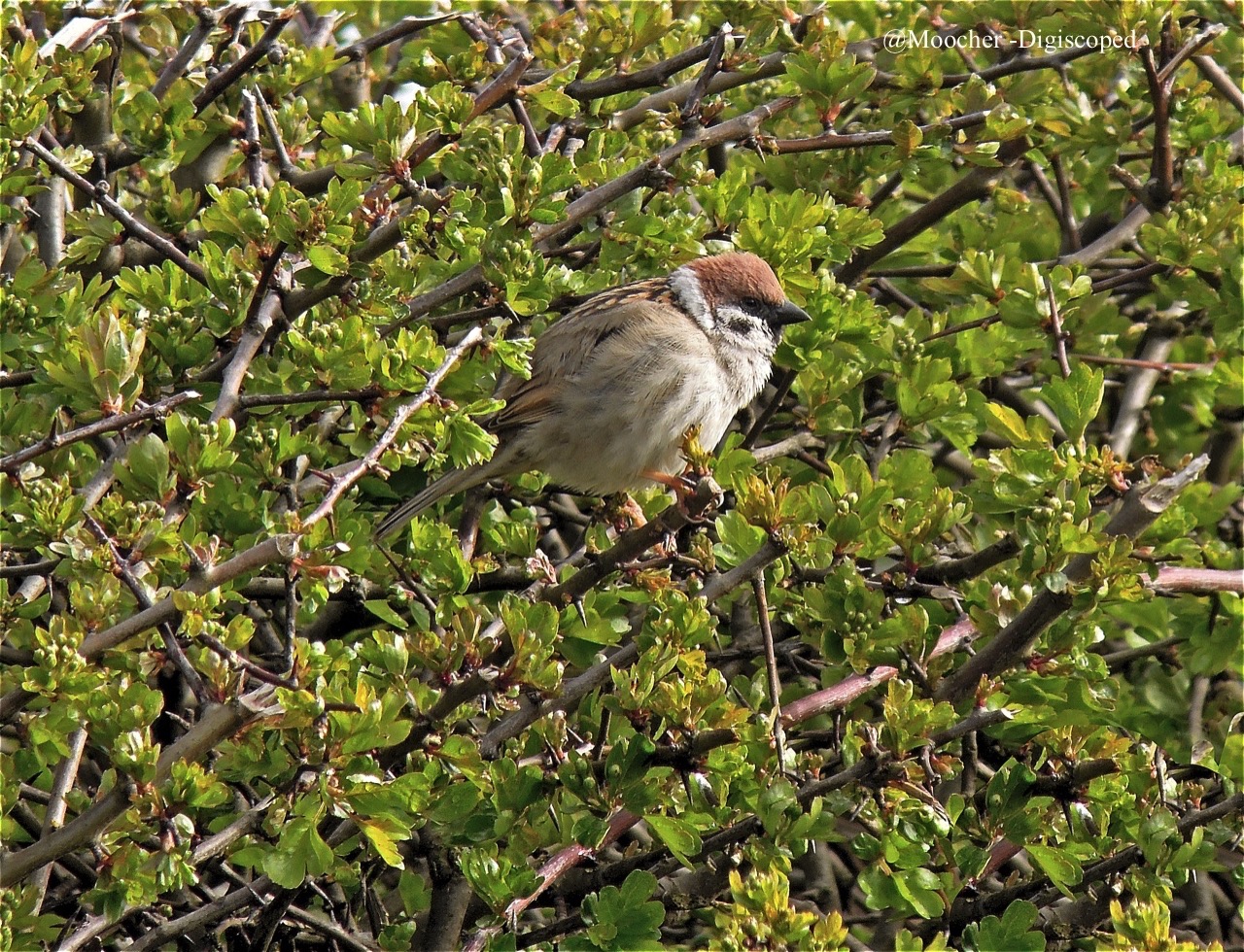
The Tree Sparrows and the Wheatear fall into the, just get a record shot category, the Corn Bunting is what I consider a better quality shot
Also, one evening after work I took my Canon G3X bridge camera for a spin. Pete had told me he had seen a Fox hunting an area we sometimes check out and I decided to head that way. I couldn’t believe my luck when I also witnessed a well conditioned fox also hunting the very same area. It eventually realized it had an audience and disappeared. It was in too much cover to try for a picture but I found out what it was so interested in. The area has quite a healthy rat population and it obviously fancied one for supper.
A Pair of Grebe on the river also made for an interesting evening.
I also managed to capture a local Hare on…….. film! That is still the word that springs to my mind, but what is the current accepted terminology? Captured on, photosensitive diodes, sensor, CCD, digitally? Film still sounds better to me.
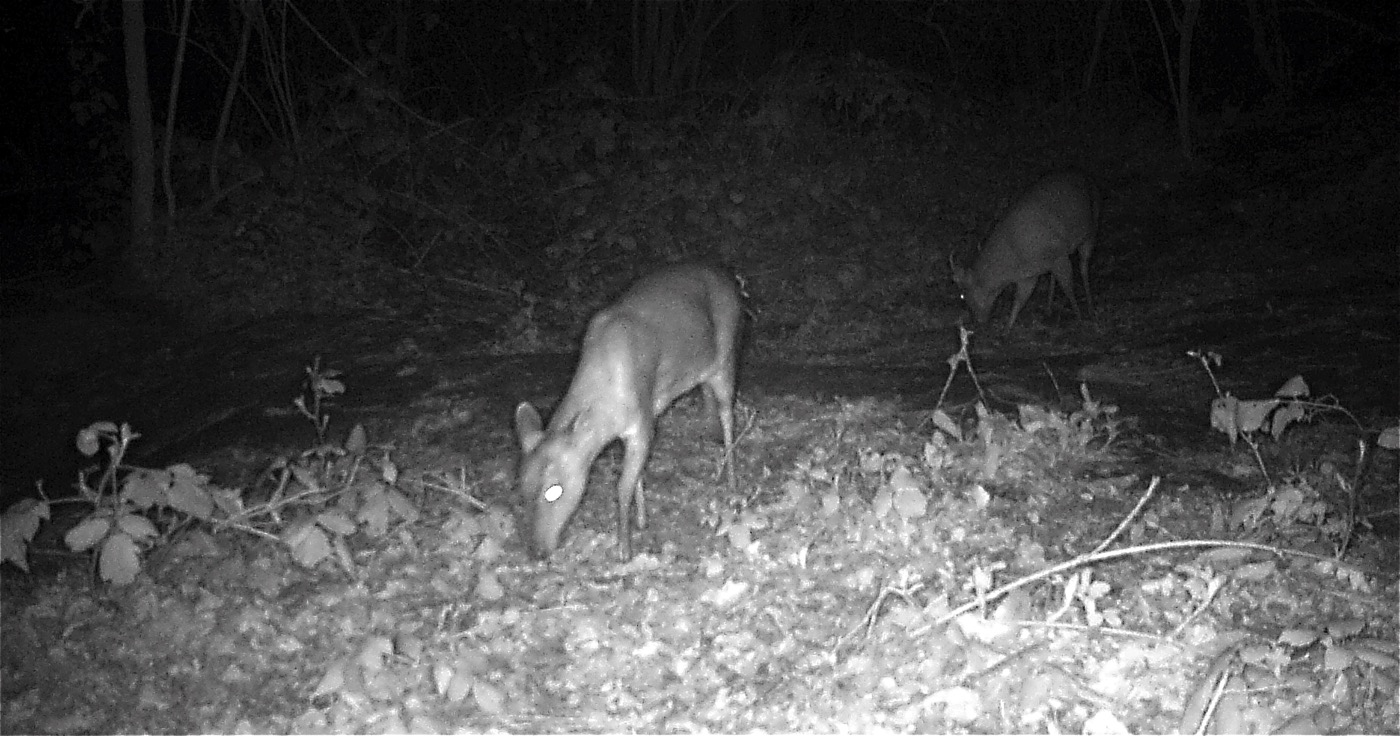
On top of that lot, I had a trail camera back in the area I picked the Otter up in last week, hoping it would again put in an appearance. No such luck though. However, Pete and I were again surprised at just how productive this clearing is when we checked the pictures to find another couple of surprises.
We found the usual suspects we've been keeping an eye on.
The surprise visitors, a pair of Muntjac deer!
Pete and I enjoyed going through all the pictures on the trail camera, all 1680 of them. We even found the ideal location to carry this task out. This could become a regular thing!
Friday, 1 April 2016
Around the locality
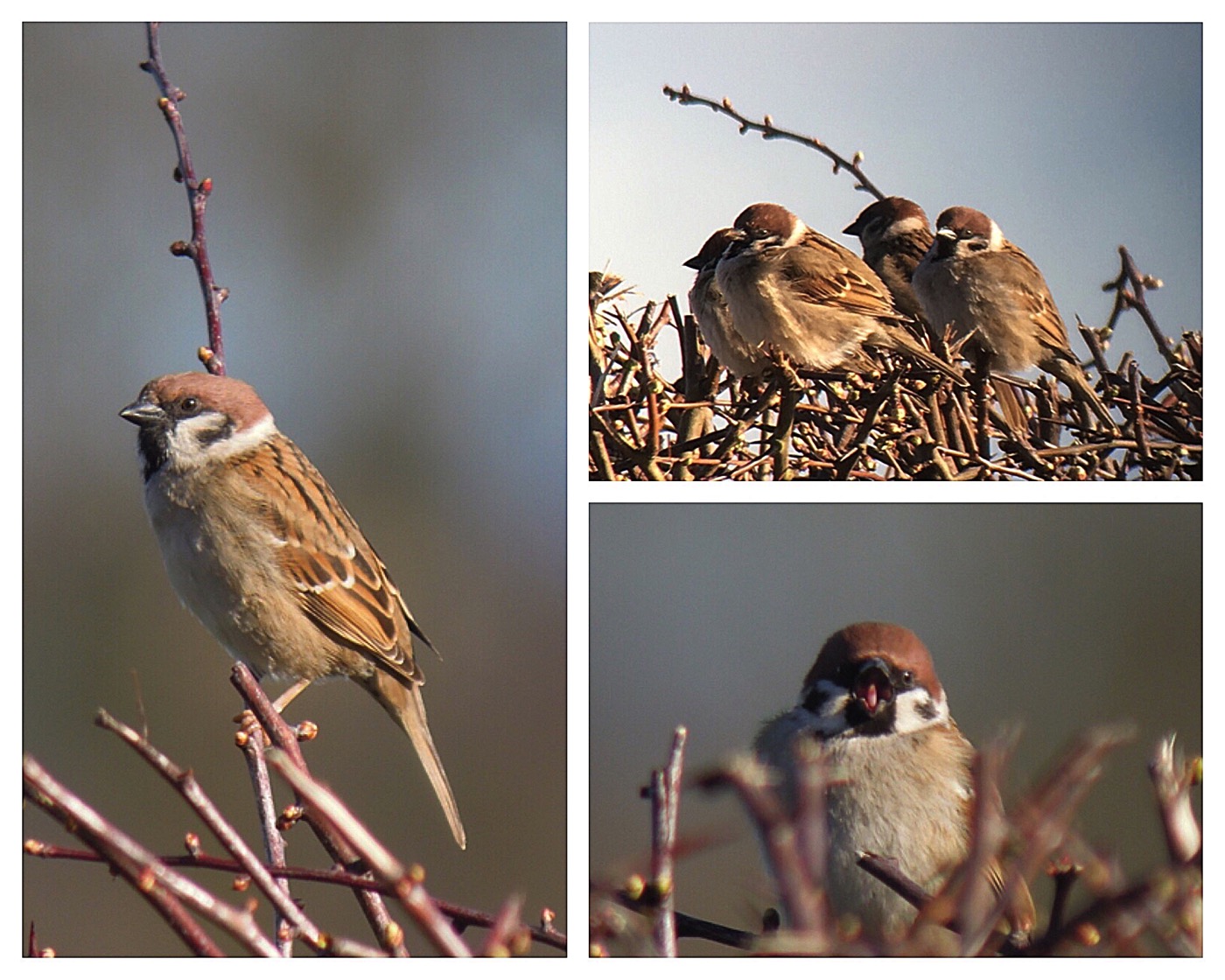
I have been hammering the local fields around my patch in the hope of an early Wheatear, but so far have drawn a blank. I was however pleased to see that last years breeding Tree Sparrows are back in residence. I had taken the spotting scope on this walk as I was also scanning hedgerow tops for Corn Bunting.


Tuesday, 22 December 2015
The Hinksford Hoopoe
It has long been an ambition of mine to see a UK Hoopoe. Even before my birding took on a more serious note there were three birds I really wanted to see; Hoopoe, Dartford Warbler and a Stone Curlew. I have now achieved that long standing target, although I never expected the Hoopoe to be a December tick!
This is the third Hoopoe I have intentionally tried to “twitch,” and the third time I have set out to see this particular Hoopoe. The first visit was three weeks ago in gale force winds. I was there at first light and hung on as long as I could, a duration of about five hours. It showed, about twenty minutes after my departure.
Visit two was last weekend, it was reported at 1.00pm and I arrived at about 2.30pm. I hoped it would show quickly as only around 90 minutes of light remained on what was already a very dull and rainy afternoon. One other birder was there and we were treated to an in flight glimpse as it passed over our heads. We were unable to relocate it. I was less than satisfied with my first Hoopoe sighting and had hoped for a picture, so Monday, the first day of my Xmas holiday; I was again in a reclaimed quarry in Wall Heath, hoping this Black Country loving Hoopoe would put in an appearance.
It did! and I was able to get a few record record shots too.
As usual, I had taken my camera and my spotting scope. My intention was to use the camera if the bird was particularly mobile, but if it allowed I could attach my phone to my scope and phonescope a few record shots. I don’t know why; after all this time phonescoping, that the quality of the pictures still surprises me.
It was early morning, overcast and very very dull. The camera even with its 1’ sensor required a high ISO to achieve anything like usable shutter speeds, especially at full zoom. I also had to go into the digital zoom range because of the distance involved to the subject; this also impacts on shutter speed and picture quality.
Now obviously the scope has a much greater optical reach than the camera and with the iPhone attached it did an admirable job. I am not sure how the phone operates as well as it does with low ISO in poor light, but on this occasion it definitely out performed the camera.
Results from the iPhone and Novagrade adapter
Results from Camera
Sunday, 11 October 2015
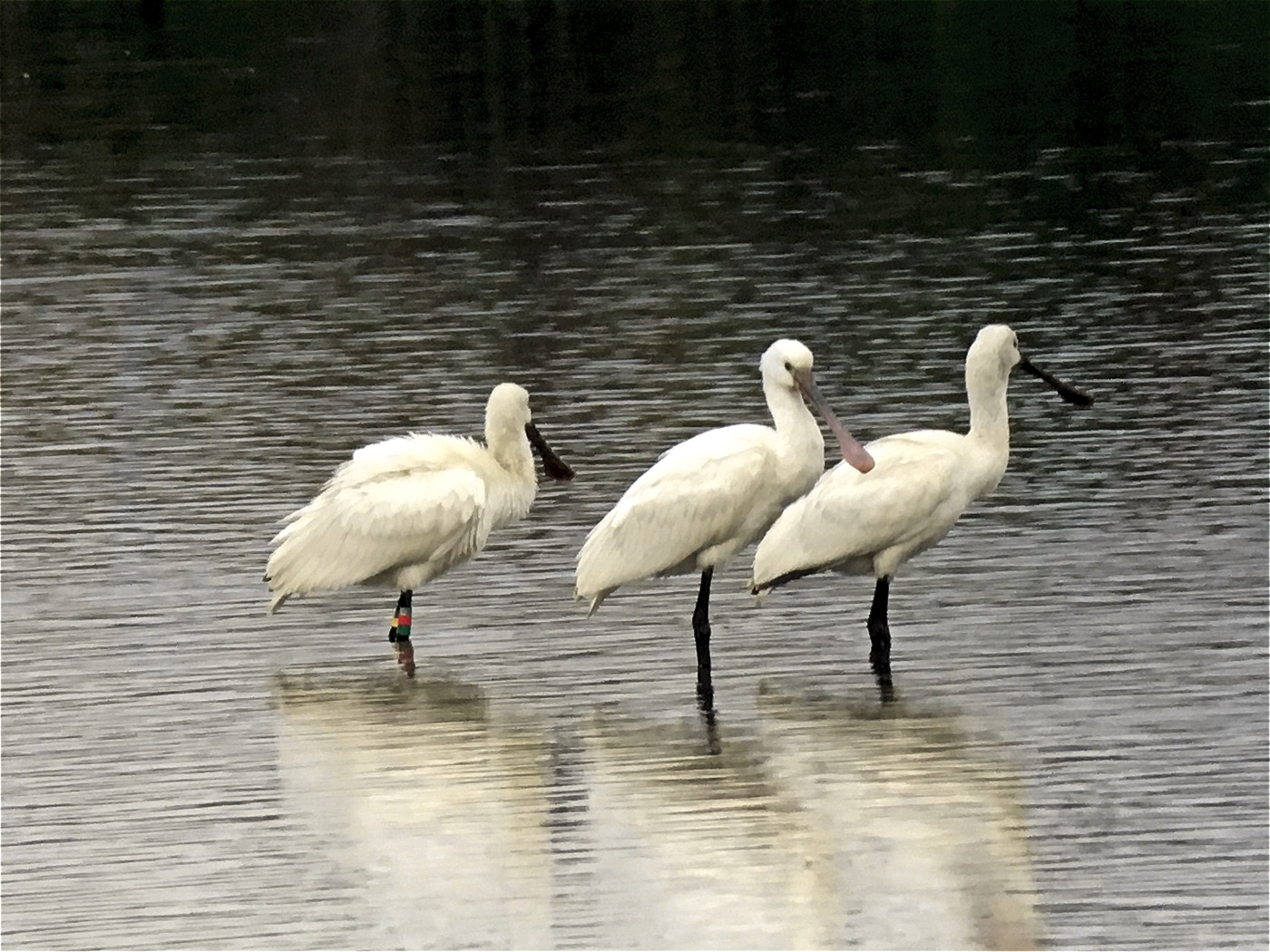
Spoonbills at Middleton
A tweet came through late Saturday afternoon reporting three Spoonbills at RSPB Middleton. Further information stated they were still there at last light. So, early Sunday morning Jon and I arrived at Middleton and with a few other early birders, were lucky enough to find the Spoonbills still resident.
We all attempted to get record shots on this dull start to the day with the early morning sun refusing to put in an appearance. My best record shots came from phonescoping the birds.
A few of my record shots.
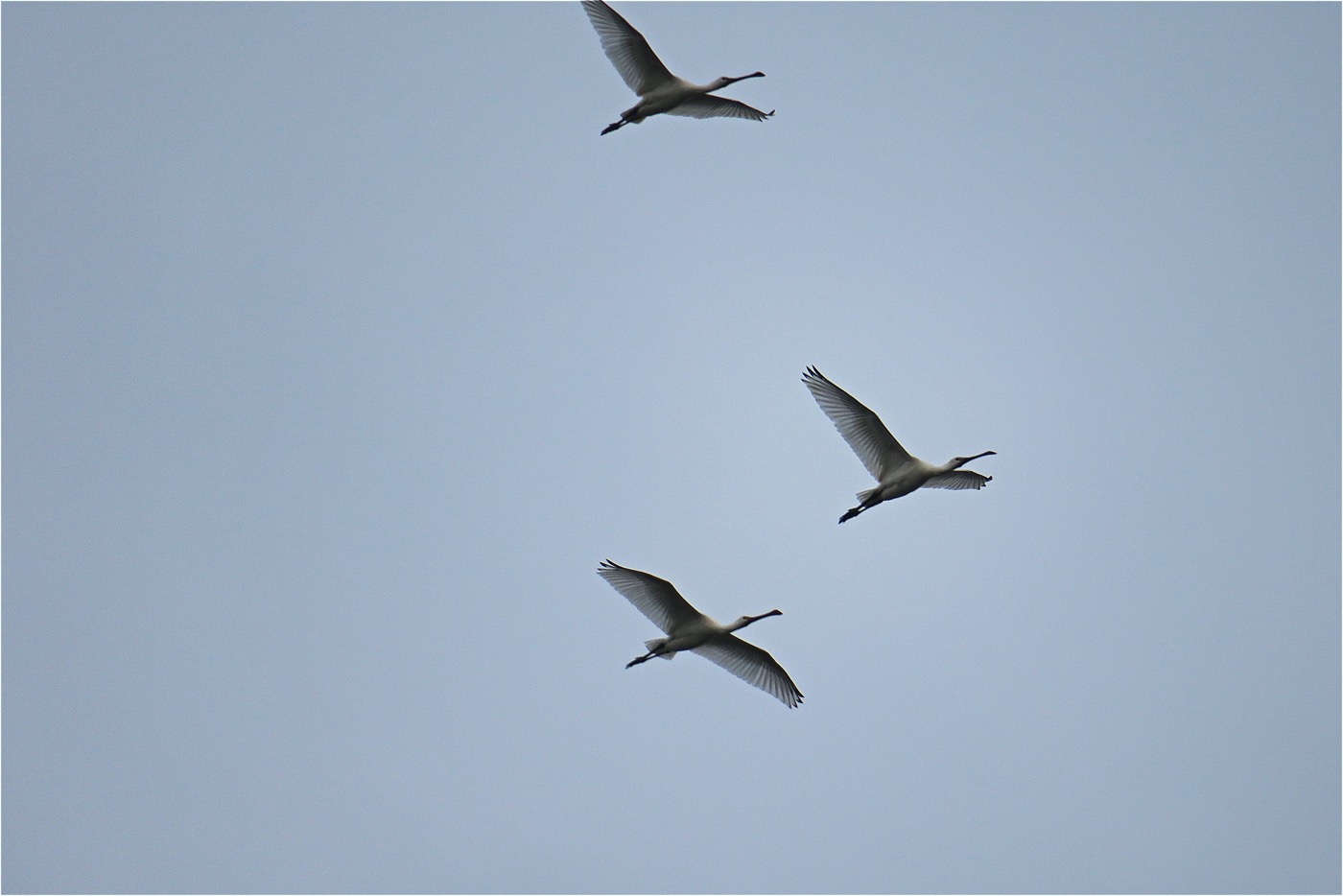
At around 8.20am, all three birds took flight and started to circle the Jubilee Wetlands. Slowly they started gaining height and eventually exited high, and in a North East direction.
I tried to capture this using the bridge camera.
Within minutes of the Spoonbills leaving, the sun put in an appearance and a couple of Long Horn cattle came over to check out what all the fuss had been about.
Using the leg colour rings, the birds were relocated, arriving at Conwy RSPB, North Wales at 1.50pm.
Tuesday, 1 September 2015
Staffordshire Birding
About 10 minutes later a group of birders in a small copse of trees came into view and a few minutes later I had joined them.
The place was alive with Spotted Flycatchers and a few Whinchat also put in an appearance.
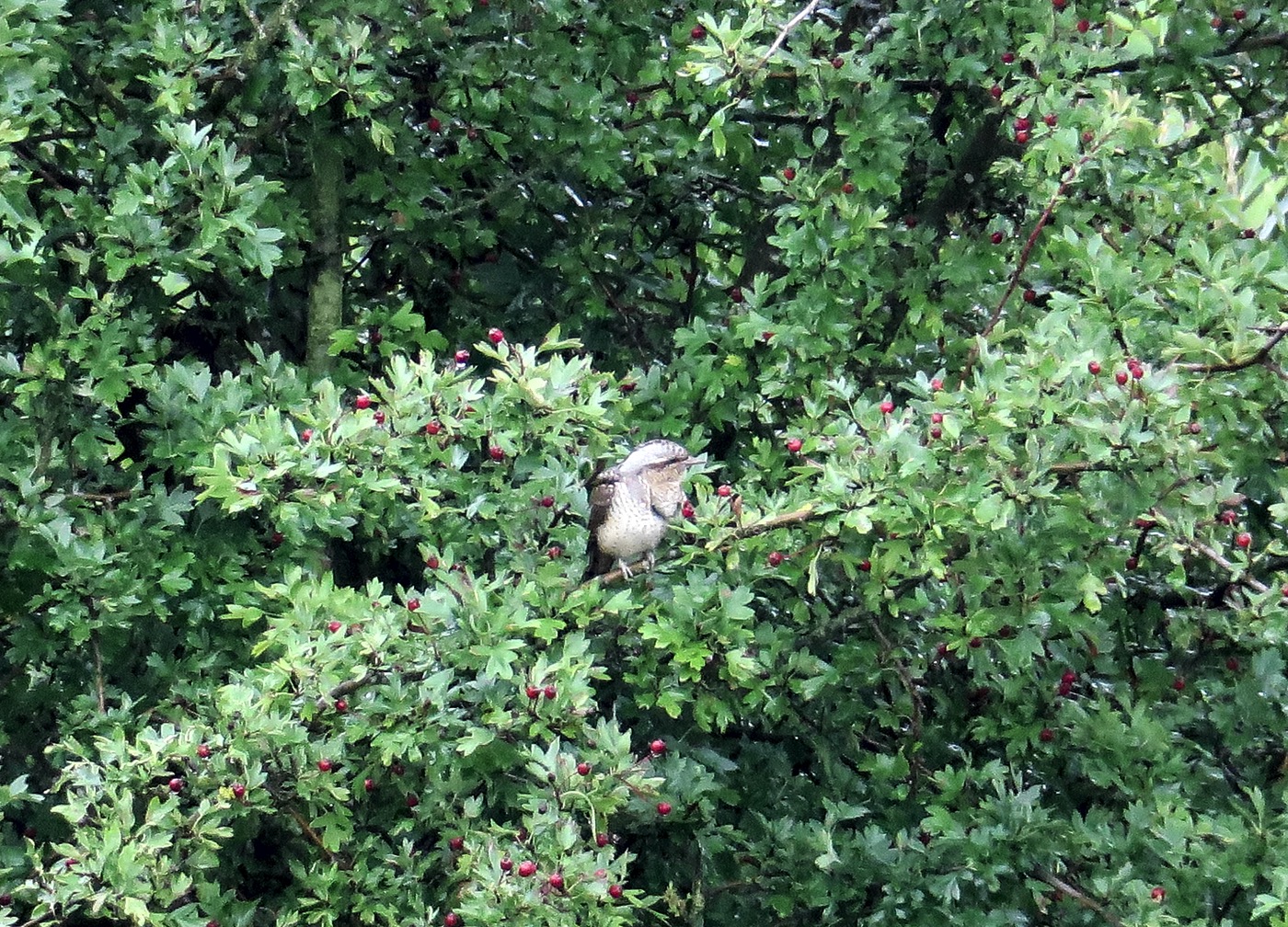
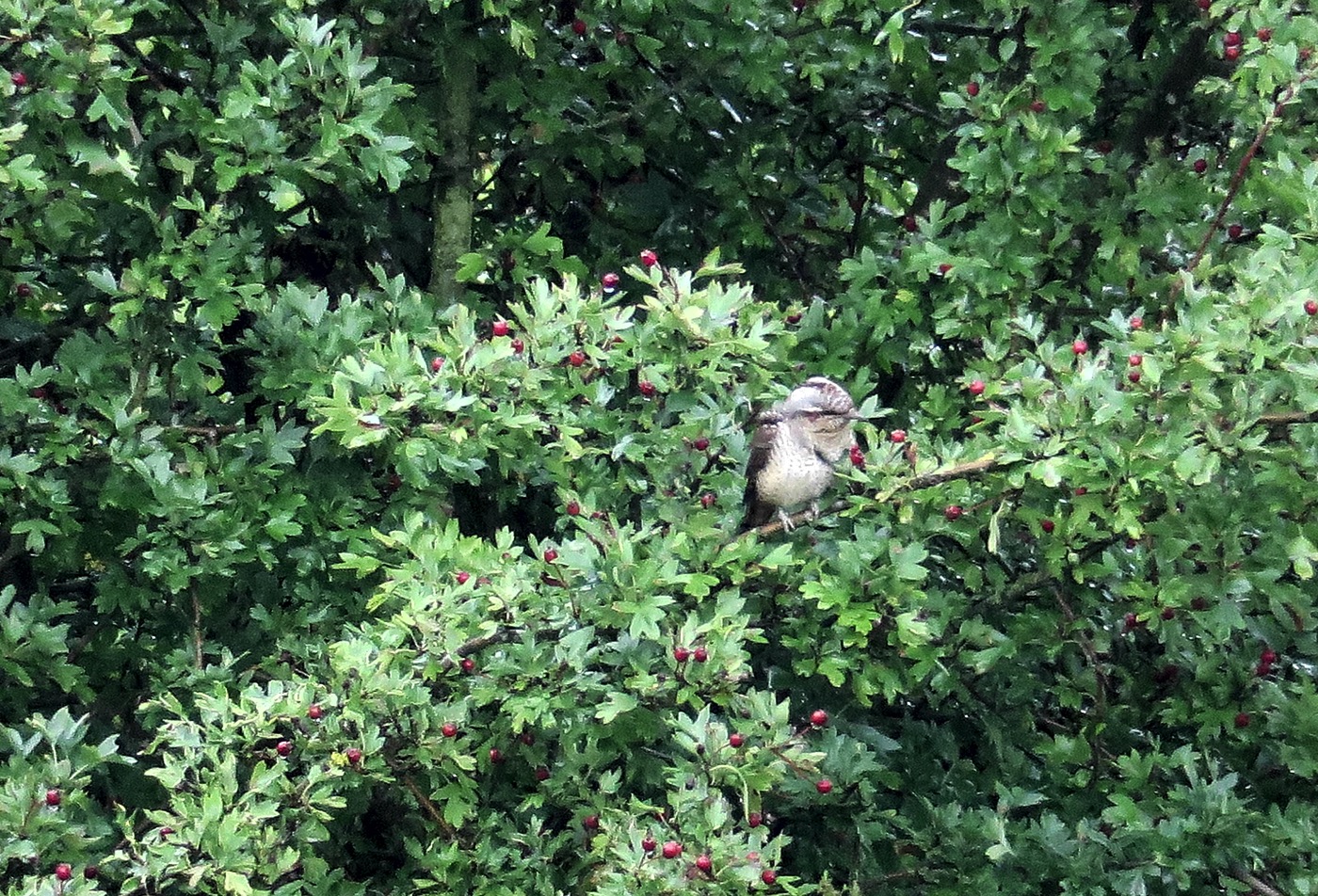
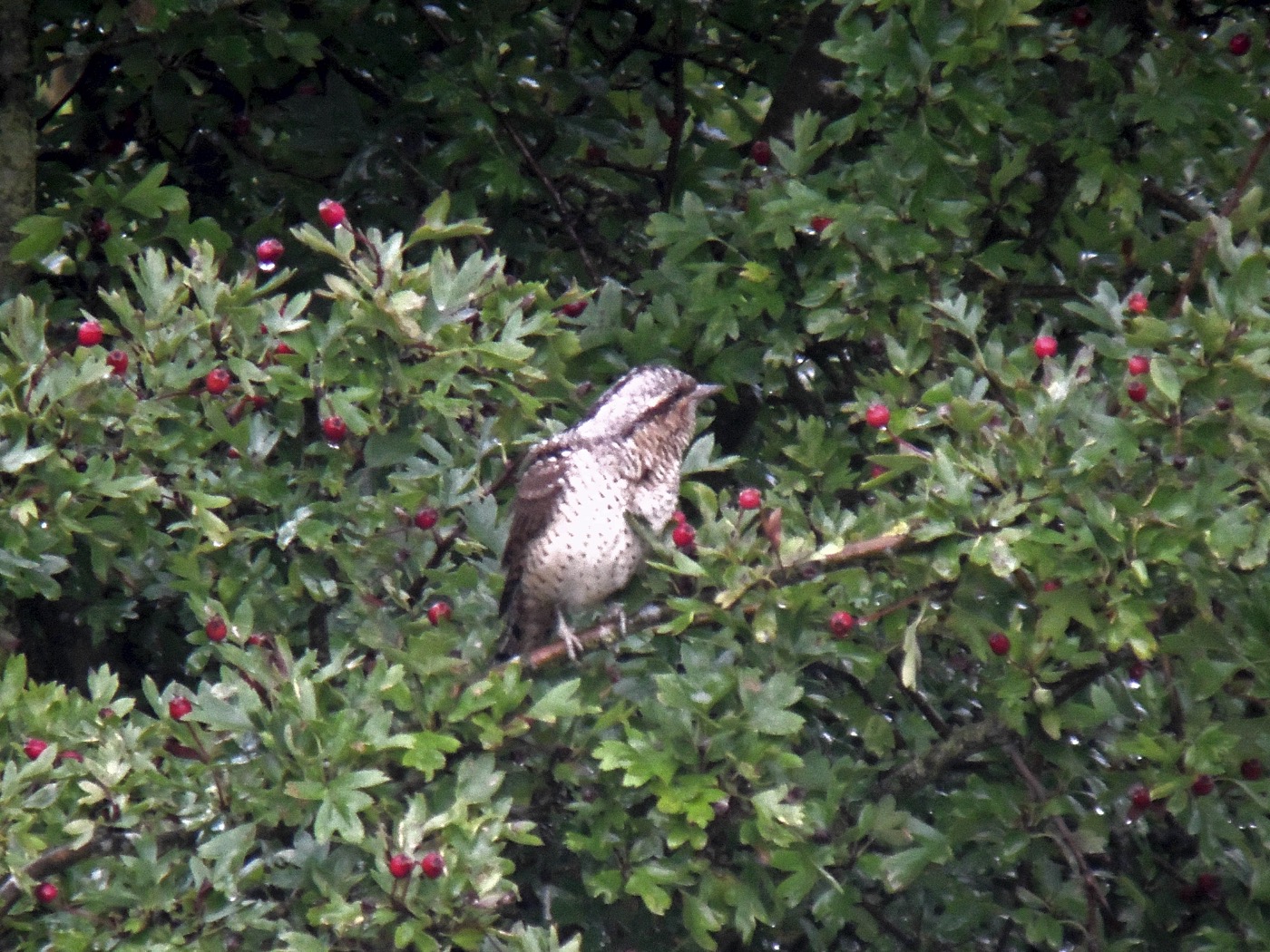
Eventually the bird I was there to see put in in an appearance. This was my first Wryneck, what a great bird. I watched it flitting between bushes and Hawthorn trees, occasionally dropping out of sight onto the ground. Once I was pleased with my views of the bird, I set about trying to get some record shots.
While the Wryneck was out of sight, I set up my digiscoping kit. To be honest I didn’t think this would be of much use as the bird was very mobile and trying to follow an active bird with digiscoping gear can be a frustrating exercise. The camera was going to be my best bet of achieving a record shot, but the bird was distant, light was poor and as it was a bank holiday, it was obviously raining.
I had to push my camera well into digital zoom to achieve these record shots due to the distance involved. As record shots go, they are OK!
Then, the Wryneck disappeared for about 15 mins, when it again appeared it landed back in the Hawthorn tree, and just sat there. The digiscoping gear was set up. I lined it up, focused and the Wryneck was most obliging.
I even managed to Videoscope some footage.
More than happy with my views and record shots of my first Wryneck, I started to think about packing the gear up when a Pied Flycatcher put in an appearance.
One of the regulars told me that the previous evening, there had been at least 8 Common Redstarts in the same area. I was very impressed with this venue and it will be a place I will be visiting with some regularity in the future.