Showing posts with label birding. Show all posts

Saturday, 9 July 2016

Shoot out

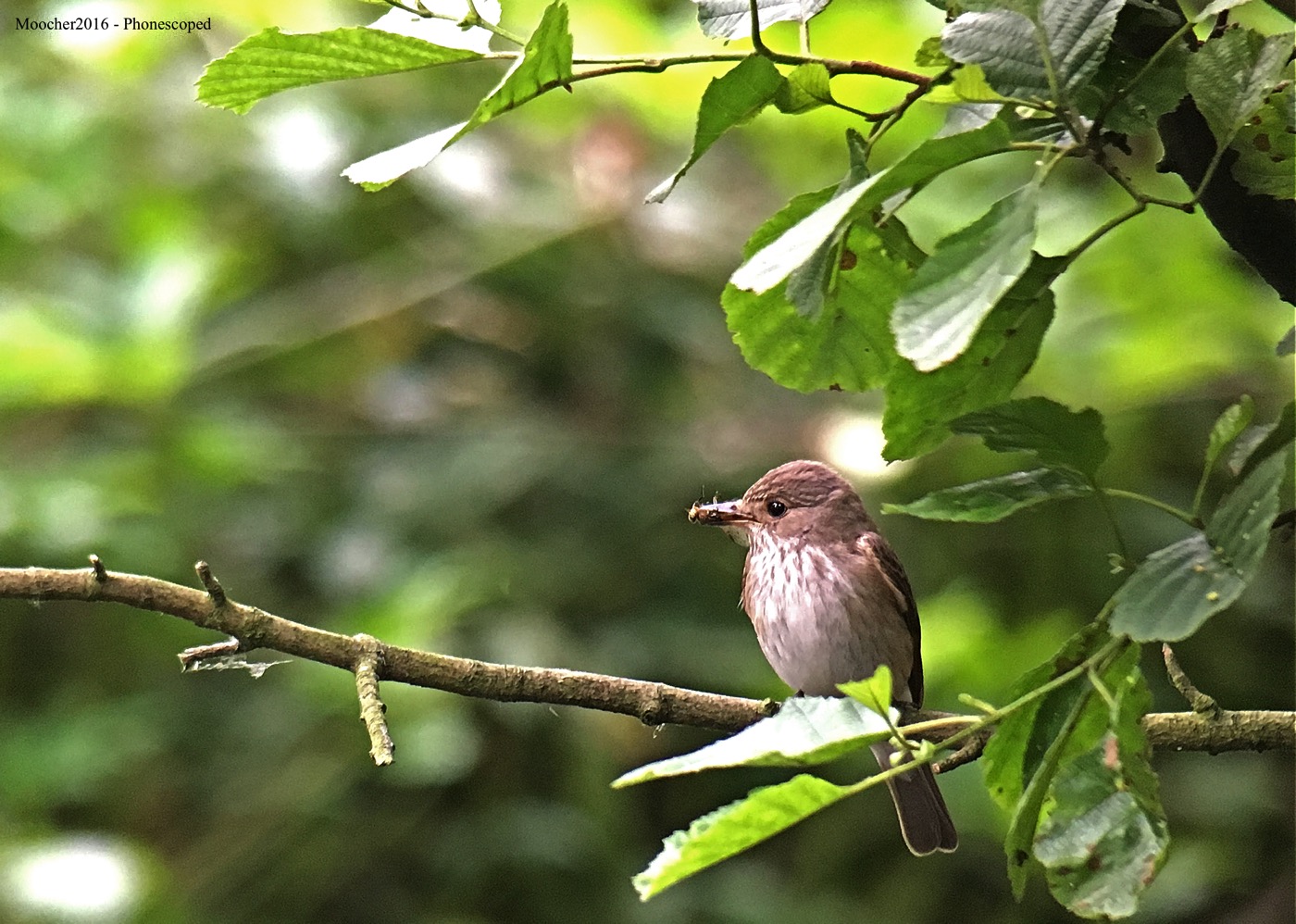
I have been watching some Spotted Flycatchers and decided to try and get some pictures of them. I have experienced conditions from raining, dull and overcast, to brief bright sunshine. I felt that they would provide a good opportunity to test my photography equipment out and see which gave me the best results. I'm pretty sure all the equipment is capable of better pictures than I can get out of them, but my ineptitude as a photographer is a constant variable thoughout these tests.

I started with my iPhone 6S connected to my scope with the Novagrade adapter.


Flyphone
 
 These were from a batch of the best ones from my iPhone through the scope.

I revisited a few days later with my Canon G3X bridge camera. As the light was poor I mounted the camera on a lightweight tripod so I could get away with slower shutter speeds and lower ISO's. These were all taken into the digital zoom region of the bridge camera. What Canon terms "fine digital.” These pictures turned out better than I expected considering poor light under the tree canopy and the distance involved.
  
IMG 0398
 
IMG 0422
IMG 0423


However, the real star of this particular shoot out was the little Nikon P300 compact camera mounted to my scope. This little Digiscoping camera has long been discontinued by Nikon, but I may look for a second hand one as a spare. 
 
All these methods of capturing a picture of a distant bird have their pros and cons. However, for sheer versatility, the Canon G3X still wins hands down.

Saturday, 30 April 2016

Mixing it up

 It's been a week of messing about with different techniques to capture a few record shots of the local wildlife that I've been lucky enough to point a camera at.

It all started after work on Monday with a report of a Ring Ouzel! I rushed home from work for a change of clothes and to grab my binoculars and scope and was off. I located the Ring Ouzel, and the farmer upon whose land it was feeding gave me permission to cross his land to get a better view.

It remained distant and I didn't want to move it on by chasing it about so decided on using my scope and phone to capture a record shot.

Ring

Phonescoping again proving its value as a tool to keep in your armory for capturing pictures of a distant subject.

After enjoying the Phonescoping it encouraged me to set up my old Nikon P300 point and shoot camera and "Digidapter" made by Paul Sayegh. I decided to have a go capturing some images with my dedicated Digiscoping kit. I have been taking my scope out with me more often to scan the fields and hedgerows and thought it would make a change to use the little camera. If you are taking your scope, it’s nice to have an easy method of capturing what you are viewing if required.

Scopeb


 My Sunday morning wander about offered a few opportunities to put this set up through its paces. As with all my captures, I aim to get a record shot, but occasionally, if distances and conditions allow, I try for a "better" quality picture.

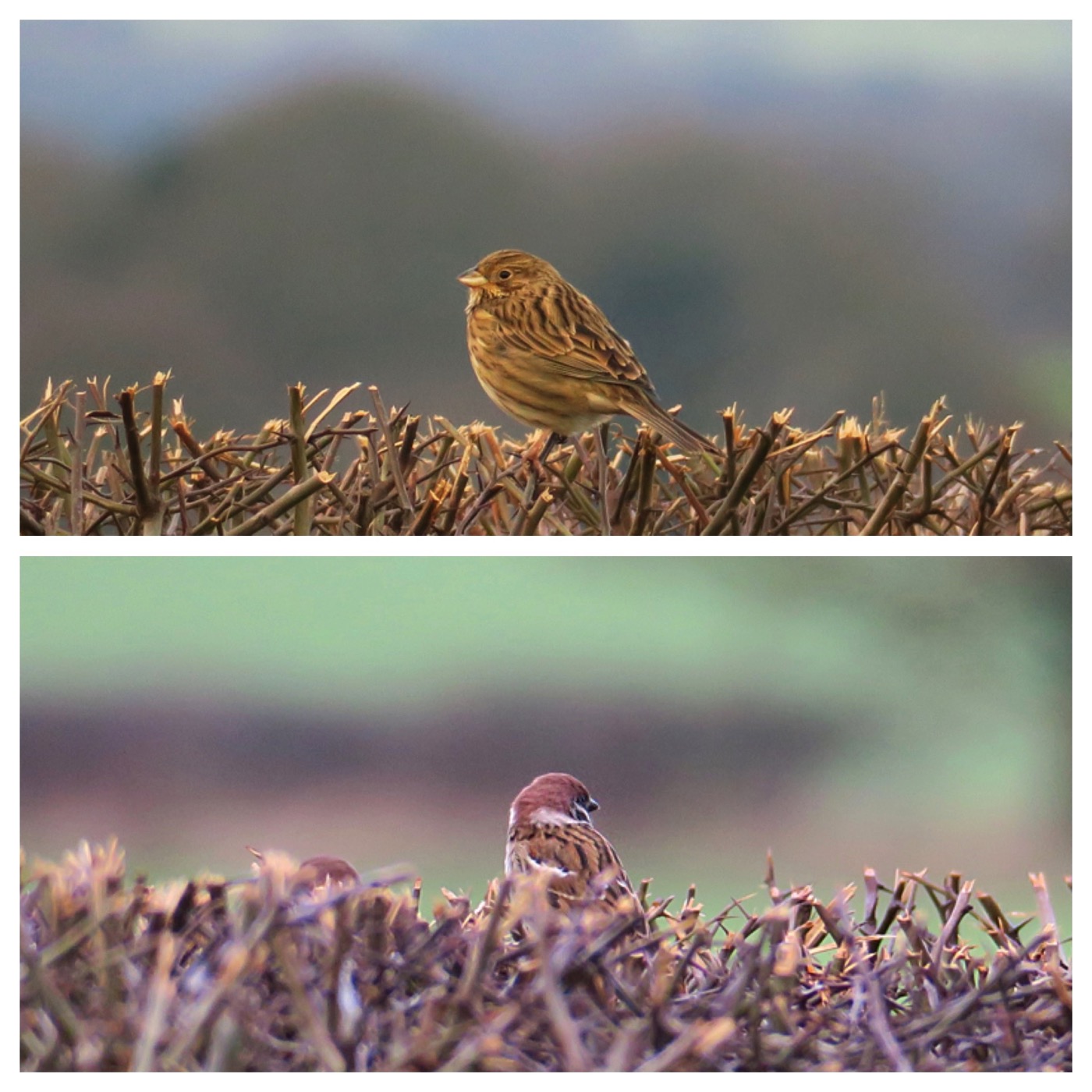
The Tree Sparrows and the Wheatear fall into the, just get a record shot category, the Corn Bunting is what I consider a better quality shot

Wheat

Tree

Corn

Also, one evening after work I took my Canon G3X bridge camera for a spin. Pete had told me he had seen a Fox hunting an area we sometimes check out and I decided to head that way. I couldn’t believe my luck when I also witnessed a well conditioned fox also hunting the very same area. It eventually realized it had an audience and disappeared. It was in too much cover to try for a picture but I found out what it was so interested in. The area has quite a healthy rat population and it obviously fancied one for supper.

Rat02

Rat2

A Pair of Grebe on the river also made for an interesting evening.

Grebe

I also managed to capture a local Hare on…….. film! That is still the word that springs to my mind, but what is the current accepted terminology? Captured on, photosensitive diodes, sensor, CCD, digitally? Film still sounds better to me. 

Hare

On top of that lot, I had a trail camera back in the area I picked the Otter up in last week, hoping it would again put in an appearance. No such luck though. However, Pete and I were again surprised at just how productive this clearing is when we checked the pictures to find another couple of surprises. 

We found the usual suspects we've been keeping an eye on.

Badgerpair

Foxday

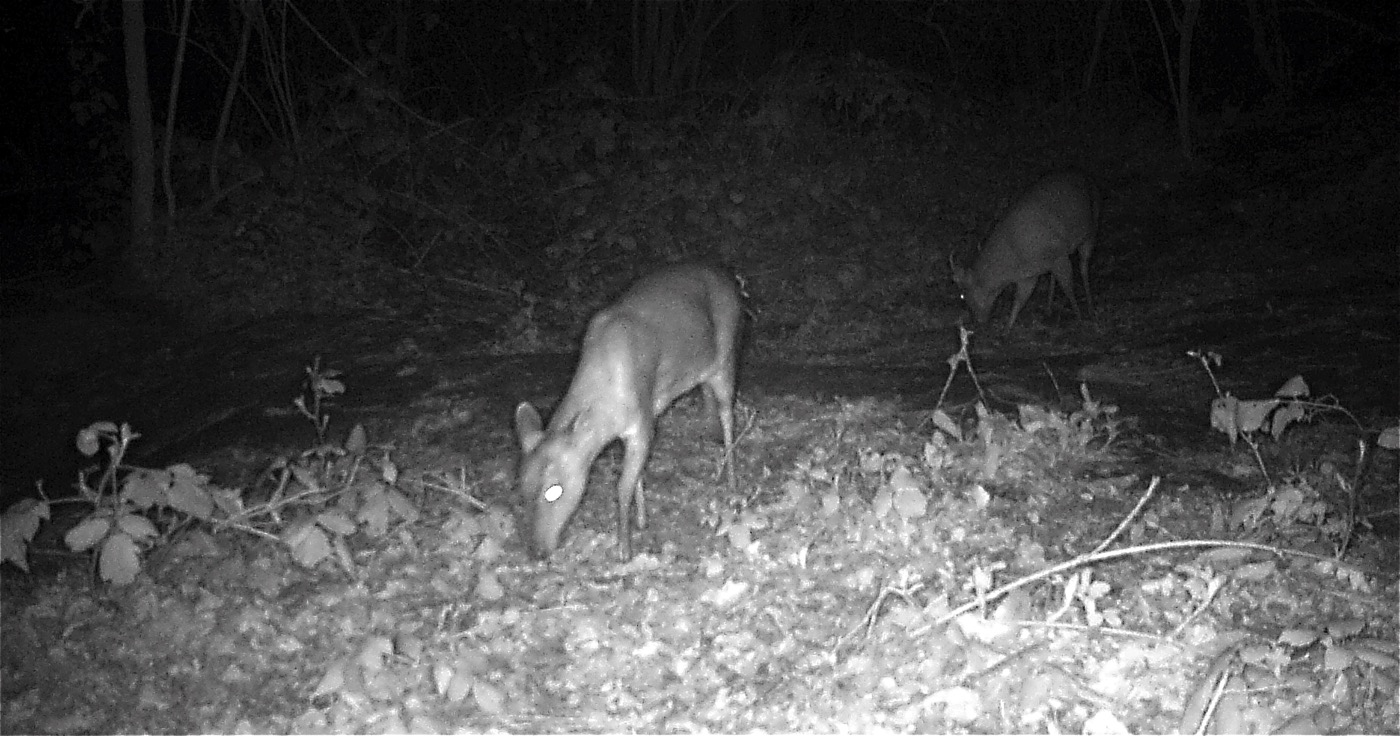
The surprise visitors, a pair of Muntjac deer! 

DeerPete and I enjoyed going through all the pictures on the trail camera, all 1680 of them. We even found the ideal location to carry this task out. This could become a regular thing!

Pint

Friday, 1 April 2016

Around the locality

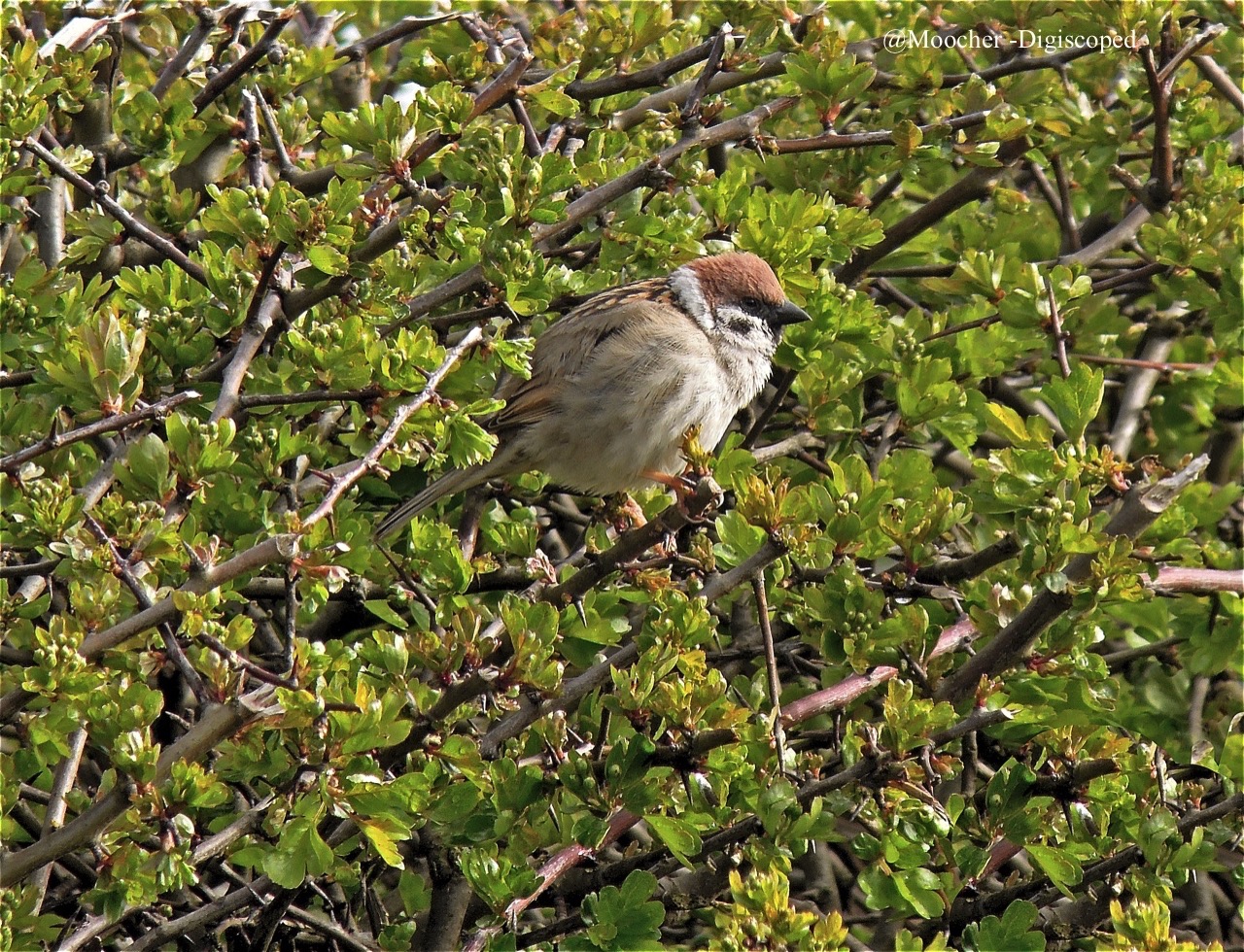
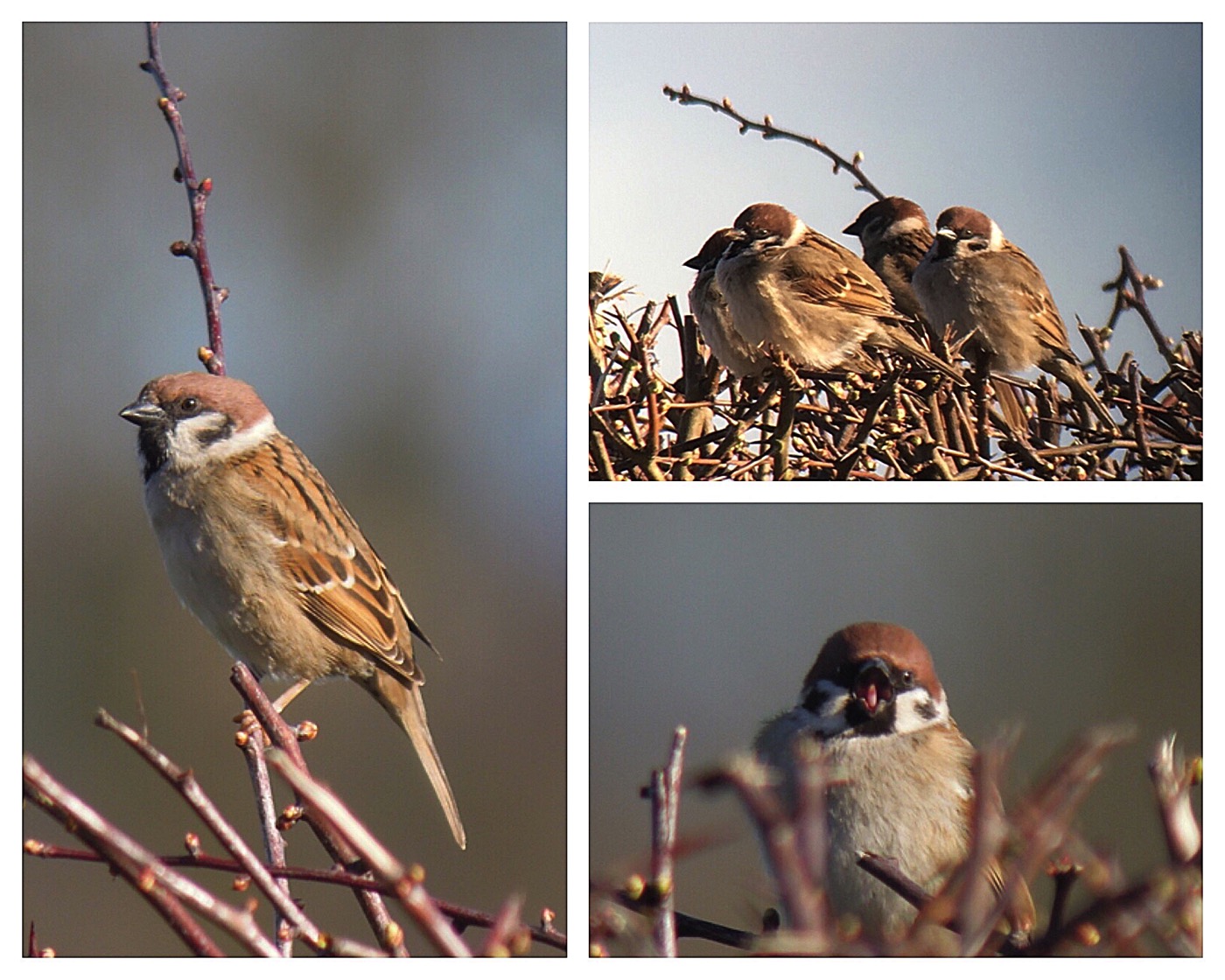
I have been hammering the local fields around my patch in the hope of an early Wheatear, but so far have drawn a blank. I was however pleased to see that last years breeding Tree Sparrows are back in residence. I had taken the spotting scope on this walk as I was also scanning hedgerow tops for Corn Bunting. 


Plenty of Yellowhammers, which I'm always pleased to see, but the small Corn Bunting flock I observed on occasions through the winter has now dispersed. I expected to see some individuals calling from favored perches proclaiming their territory in the early sunshine. Maybe it's still a little too cold? I expect to see them soon. 


I put the scope to use and attached my camera to try and get some pictures of the Tree Sparrows without getting to close and spooking them. 

 
Treeb
Later in the week while out enjoying some sunshine, even though temperatures struggled to rise I was lucky enough to get close enough to a feeding Muntjac deer. I held my breath and hoped the shutter sounds from my camera wouldn't spook it. It hung around and I managed a few shots I am pleased with. 


Saturday mornings walk was cut short due to rain. Pete and I were checking an area we occasionally visit to see if Tree Sparrows are also breeding there. There are a few about, but not as many as in our other colony. I would like to think they may also breed here. Will have another look in better weather conditions. As a bonus, we saw our first local Hare of the year as it put some distance between us across the fields.

At some ungodly hour in the early hours of Sunday morning, I went to see if any badgers were about. I arrived in the dark and quietly made my way towards one of their favored areas. As soon as I entered the first field I heard some chattering coming from directly in front of me and only about 80 yards out. I slowly raised my binoculars (it’s amazing just how much more you can see in the dark using them) and there, still chattering away were two badgers rolling around play fighting in the field. They took turns chasing each other, like a game of badger tig, one would catch the other, they would roll about loudly chattering and then one would take off at full flight with the other in pursuit. I watched this until they got bored or too exhausted to carry on and they wandered off. I headed to another area I thought they may visit on their travels and set up the camera. I then took up a comfortable viewpoint downwind and waited to see what unfolded.

— The outcome was pretty poor. Nothing captured on camera and visibility down to a few feet in the darkness due to rain and low lying mist. I had another brief badger sighting, but it soon disappeared into the mist and gloom.  I gave it up as a bad job and headed back home for a much needed nap.

Wednesday, 13 January 2016

Here we go again

Another year starts and I am looking forward to seeing if I can photograph some Badgers from local Setts I have been watching. They have proved to be very elusive of late and although I have seen signs of their activity, I have not yet clapped eyes on a badger about its business in 2016. Mind you, we are only 10 days into the new year as I write this, but I have already been badger watching a couple of times with no success.

Yesterday’s birding threw up a few treats. Managing Corn Bunting, Tree Sparrow, Grey Partridge and plenty of Skylarks, so I was pleased with that.

My thoughts though are with badgers at the moment, so later that day I went to check out another badger sett I keep an eye on. Activity here is really ramping up and although it isn’t as local to me as the sett I frequently visit, I feel it may house a bigger colony of Meles meles and allow for more successful observation. 
 

IMG 0133

I intend spending more of my free time watching and attempting to photograph badgers this year, and my free time in January will be spent just watching and attempting to learn the best times to arrive to maximise my chances of a successful encounter. If I can try to ascertain the routines of the badgers in these setts I could save myself a lot of siting around and cut down on waiting time. I may try to use a trail camera to record the comings and goings of these setts where possible and see if there is noticeable pattern in the times these badgers emerge to begin an evenings foraging and the times they return.

It isn’t unfortunately as easy as just placing a trail camera on site and collecting it again a week or so later; these setts are not in remote areas and an unconcealed trail camera will soon disappear.

I only own one trail camera at the moment, but I think i may add another one or two to my collection of equipment this year. It will all depend on finding suitable sites to install and leave them to do their thing while being relatively confident that someone won’t find and pocket it a couple of days later.

I ended up digging out the trail camera and setting it up at this location. It was difficult to conceal and i spent a bit of time camouflaging it so it didn’t easily stand out. I have seen the odd badger at this location when our paths have unexpectedly crossed, but it is the first time I have set a trail camera here. It’s been a while since I used the trail camera and rookie mistake, i forget to check how I had it set to capture pictures. Unfortunately, I had it set to leave 10 mins between each activation; great for leaving somewhere for month, but not ideal for a few days when you would like to capture a lot of activity.

Forty eight hours later, most of it being accompanied by torrential rain, I decided to check on the camera. Rainy, misty nights aren’t great for any type of photography. It was after work, dark and still raining. It was difficult to get to the sett as I needed to walk up quite a steep hill. The mud was very slippy due to the ground being ripped up by fools on scrambling bikes prior to the rain. It really was a case of two steps forward and slide back one. On reaching the area, I noticed the rain had caused some subsidence and someone had cordoned the area off. If the area was going to be getting some attention, I decided I would remove the camera.

It was once at home when checking the SD card I realized I had not had the camera set on the best settings, nevertheless, I had captured a few shots of a couple of the sett’s residents.

BadgersH

So, my badger picture account for 2016 is open with pictures of some badgers I have never camera trapped before. I will resume my interest in this area as the weather improves.

I am more interested in my very local sett and its residents (or maybe resident) at the moment. Activity suggest there is more than a solitary badger in this sett, but my last sightings of 2015 after the sett was damaged was of the same solitary boar. Hopefully, this group will reassemble? I will keep my eye on it.

Tuesday, 22 December 2015

The Hinksford Hoopoe

 It has long been an ambition of mine to see a UK Hoopoe. Even before my birding took on a more serious note there were three birds I really wanted to see; Hoopoe, Dartford Warbler and a Stone Curlew. I have now achieved that long standing target, although I never expected the Hoopoe to be a December tick!

This is the third Hoopoe I have intentionally tried to “twitch,” and the third time I have set out to see this particular Hoopoe. The first visit was three weeks ago in gale force winds. I was there at first light and hung on as long as I could, a duration of about five hours. It showed, about twenty minutes after my departure.

Visit two was last weekend, it was reported at 1.00pm and I arrived at about 2.30pm. I hoped it would show quickly as only around 90 minutes of light remained on what was already a very dull and rainy afternoon. One other birder was there and we were treated to an in flight glimpse as it passed over our heads. We were unable to relocate it. I was less than satisfied with my first Hoopoe sighting and had hoped for a picture, so Monday, the first day of my Xmas holiday; I was again in a reclaimed quarry in Wall Heath, hoping this Black Country loving Hoopoe would put in an appearance.

It did! and I was able to get a few record record shots too.

As usual, I had taken my camera and my spotting scope. My intention was to use the camera if the bird was particularly mobile, but if it allowed I could attach my phone to my scope and phonescope a few record shots. I don’t know why; after all this time phonescoping, that the quality of the pictures still surprises me.

It was early morning, overcast and very very dull. The camera even with its 1’ sensor required a high ISO to achieve anything like usable shutter speeds, especially at full zoom. I also had to go into the digital zoom range because of the distance involved to the subject; this also impacts on shutter speed and picture quality.

Now obviously the scope has a much greater optical reach than the camera and with the iPhone attached it did an admirable job. I am not sure how the phone operates as well as it does with low ISO in poor light, but on this occasion it definitely out performed the camera.

Results from the iPhone and Novagrade adapter 

Hoopoe phone 02


Hoopoe phone 01


Results from Camera

CanonHoopoe01

CanonHoopoe02

Sunday, 11 October 2015

Spoonbills at Middleton

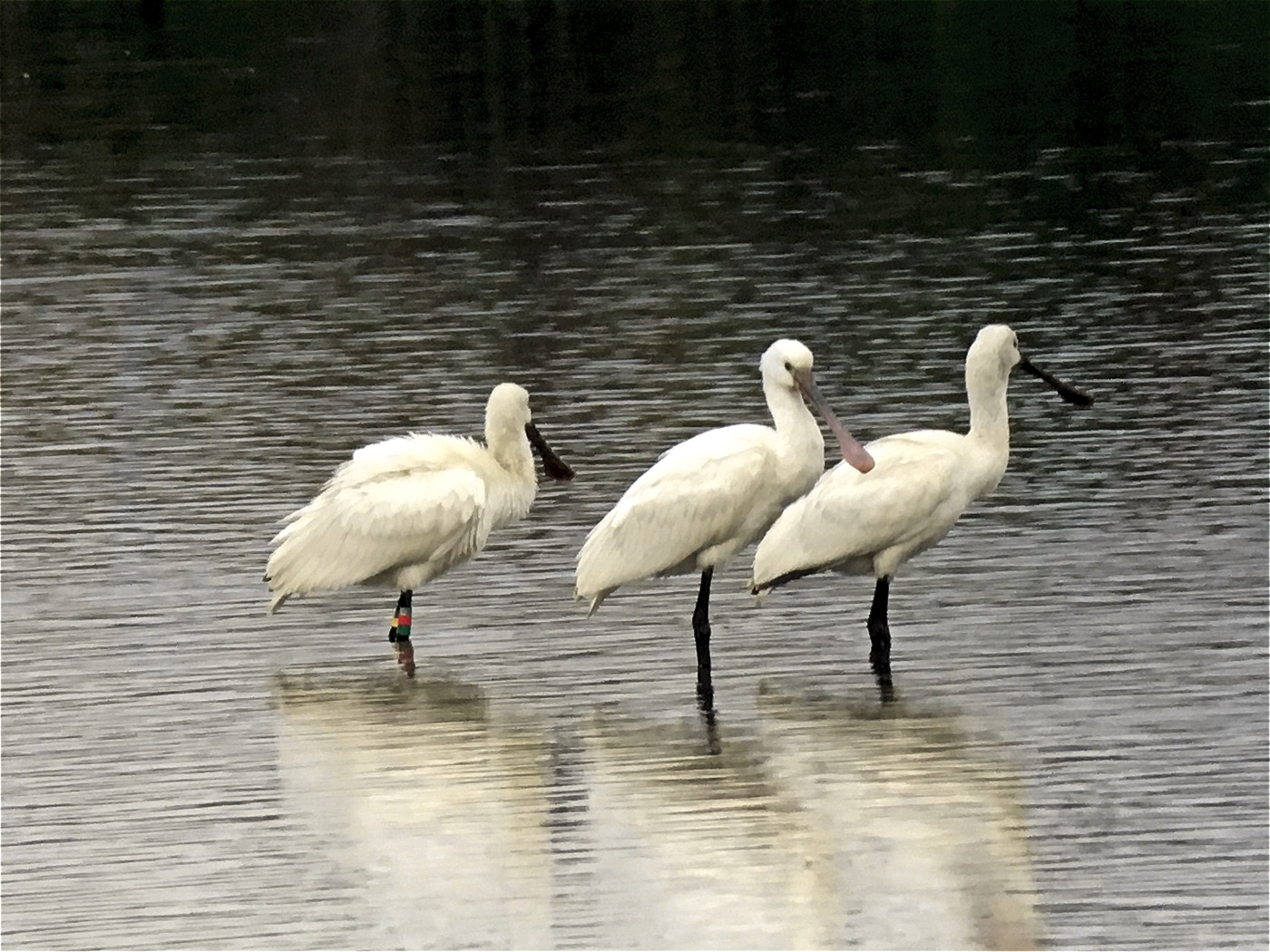
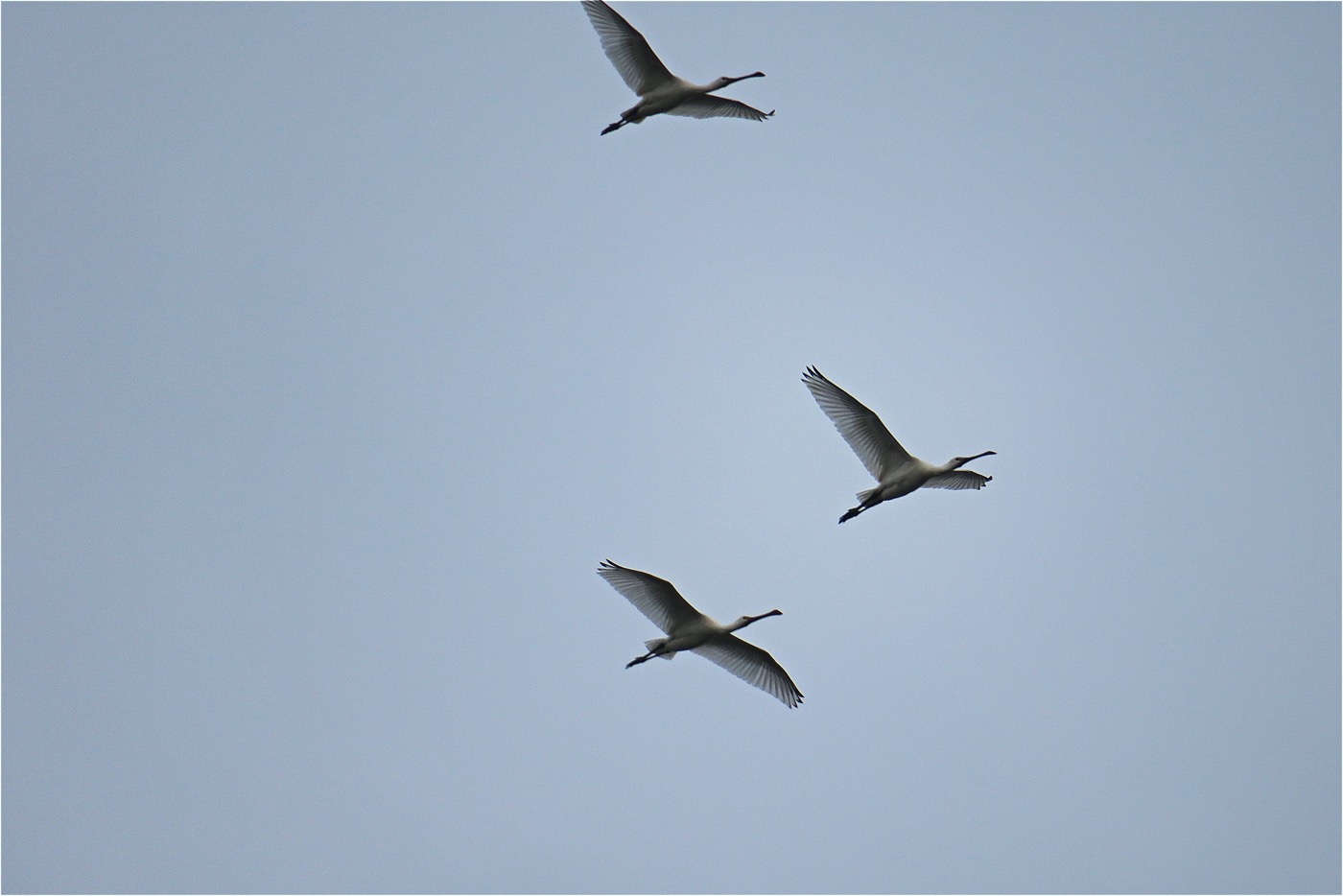
A tweet came through late Saturday afternoon reporting three Spoonbills at RSPB Middleton. Further information stated they were still there at last light. So, early Sunday morning Jon and I arrived at Middleton and with a few other early birders, were lucky enough to find the Spoonbills still resident.

We all attempted to get record shots on this dull start to the day with the early morning sun refusing to put in an appearance. My best record shots came from phonescoping the birds.

IMG 6989

A few of my record shots.

Spoon01

IMG 0145

Spoon03

Spoon04

At around 8.20am, all three birds took flight and started to circle the Jubilee Wetlands. Slowly they started gaining height and eventually exited high, and in a North East direction.

I tried to capture this using the bridge camera.

Spoon07

Within minutes of the Spoonbills leaving, the sun put in an appearance and a couple of Long Horn cattle came over to check out what all the fuss had been about.

IMG 6990

Using the leg colour rings, the birds were relocated, arriving at Conwy RSPB, North Wales at 1.50pm.

Tuesday, 1 September 2015

Staffordshire Birding

Friday saw me heading to Harrington Airfield in Northamptonshire in search of a reported Wryneck. I have been to this airfield before for a reported Red Backed Shrike a couple of years ago, I dipped then, and I dipped this visit too. I arrived around 11am with the bird last being seen at about 10.15am. There where quite a few birders searching the area, but it was never relocated. I left at around 3pm.

Bank Holiday Monday and another Wryneck reported. Even better, it’s in Staffordshire. I set off and about an hour later arrive at Berry Hill Fields. This is a site I have never been to before and to be honest I had no idea where to go. Grabbing all my gear from the boot I ventured onto this large expanse of scrub land and horse paddocks. I hadn’t walked that far when I crossed paths with another birder and he pointed me in the general direction saying, “Just keep walking that way until you see a group of birders.” 

Berry Hil

About 10 minutes later a group of birders in a small copse of trees came into view and a few minutes later I had joined them. 
The place was alive with Spotted Flycatchers and a few Whinchat also put in an appearance.

Spot fly

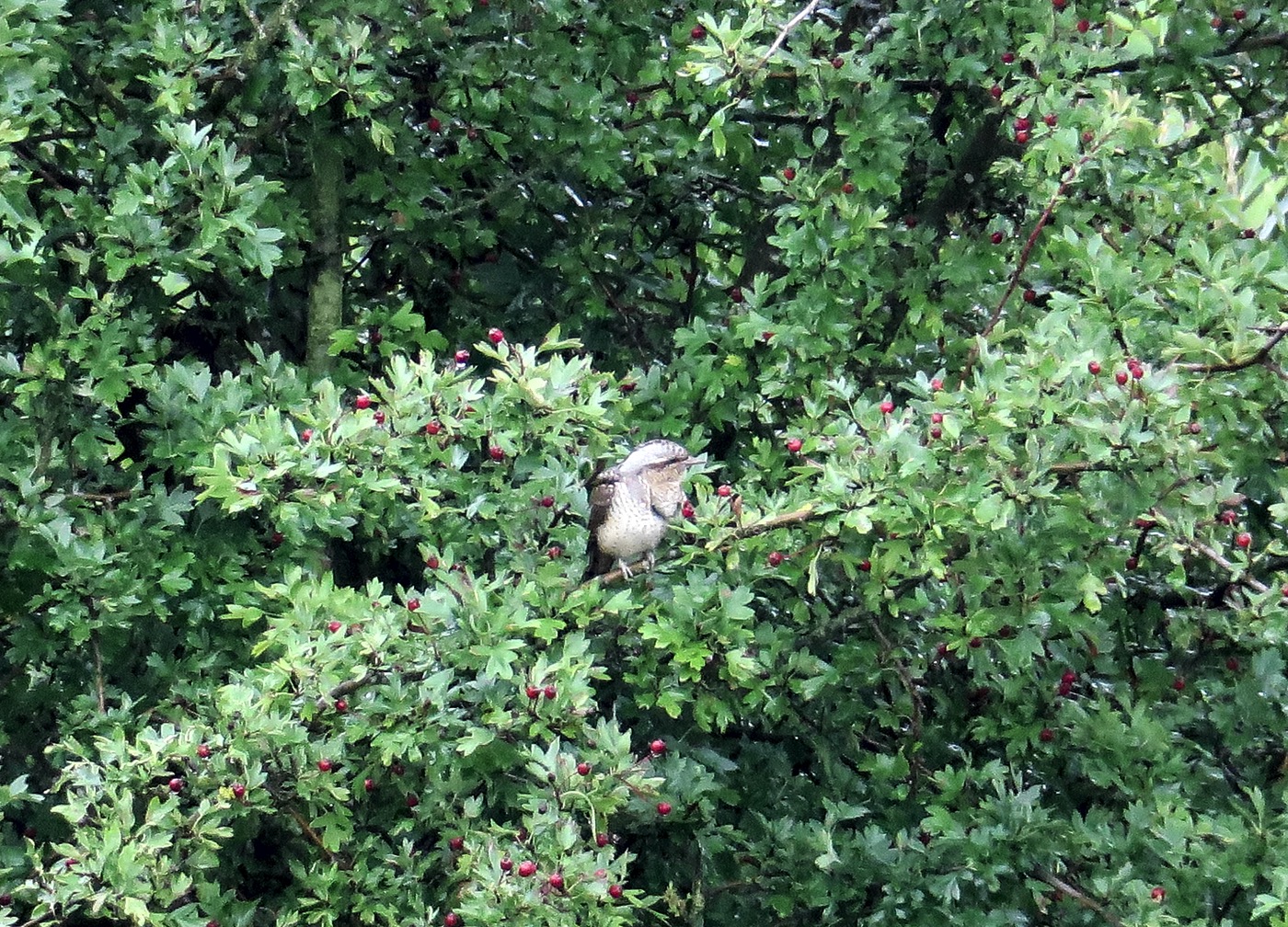
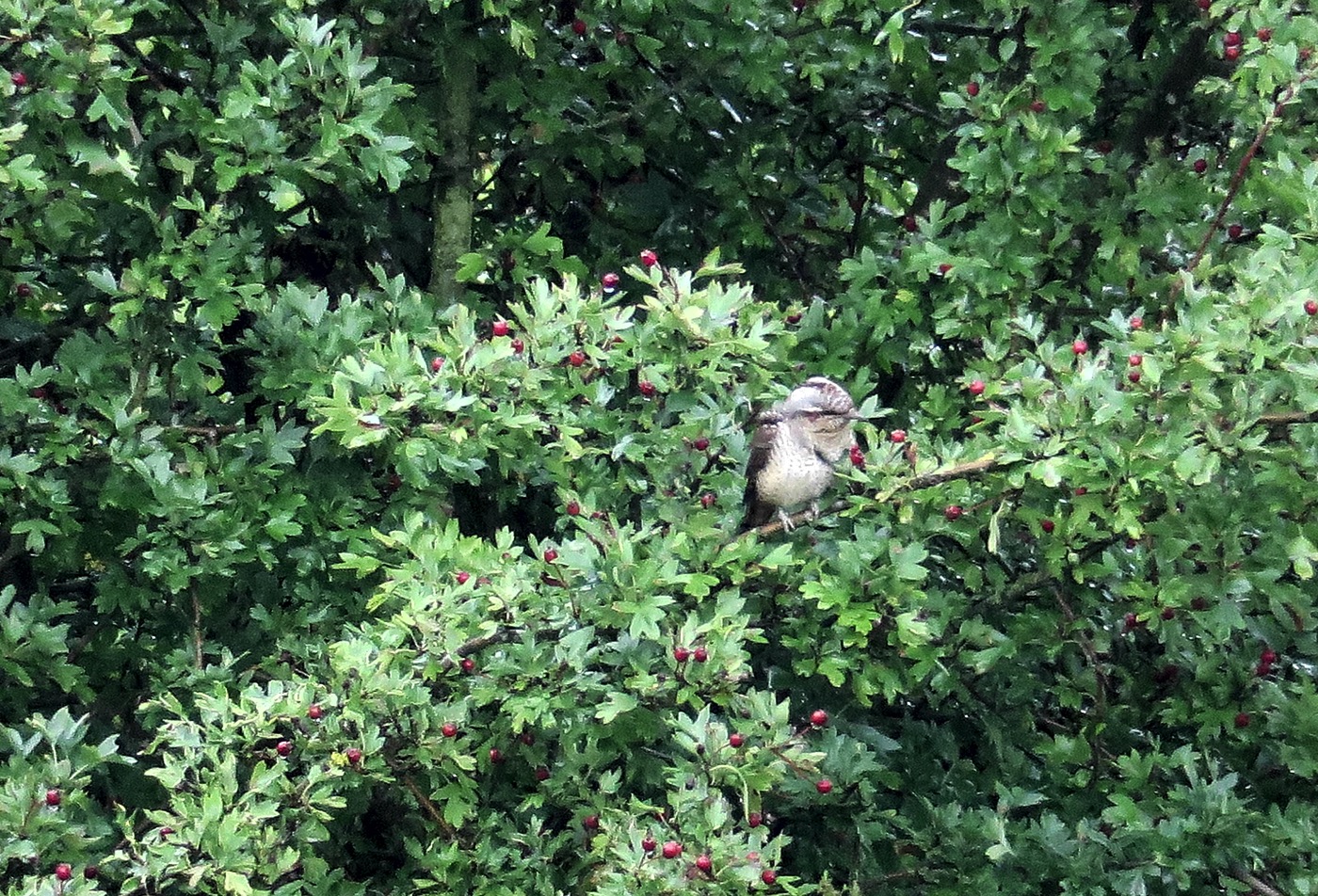
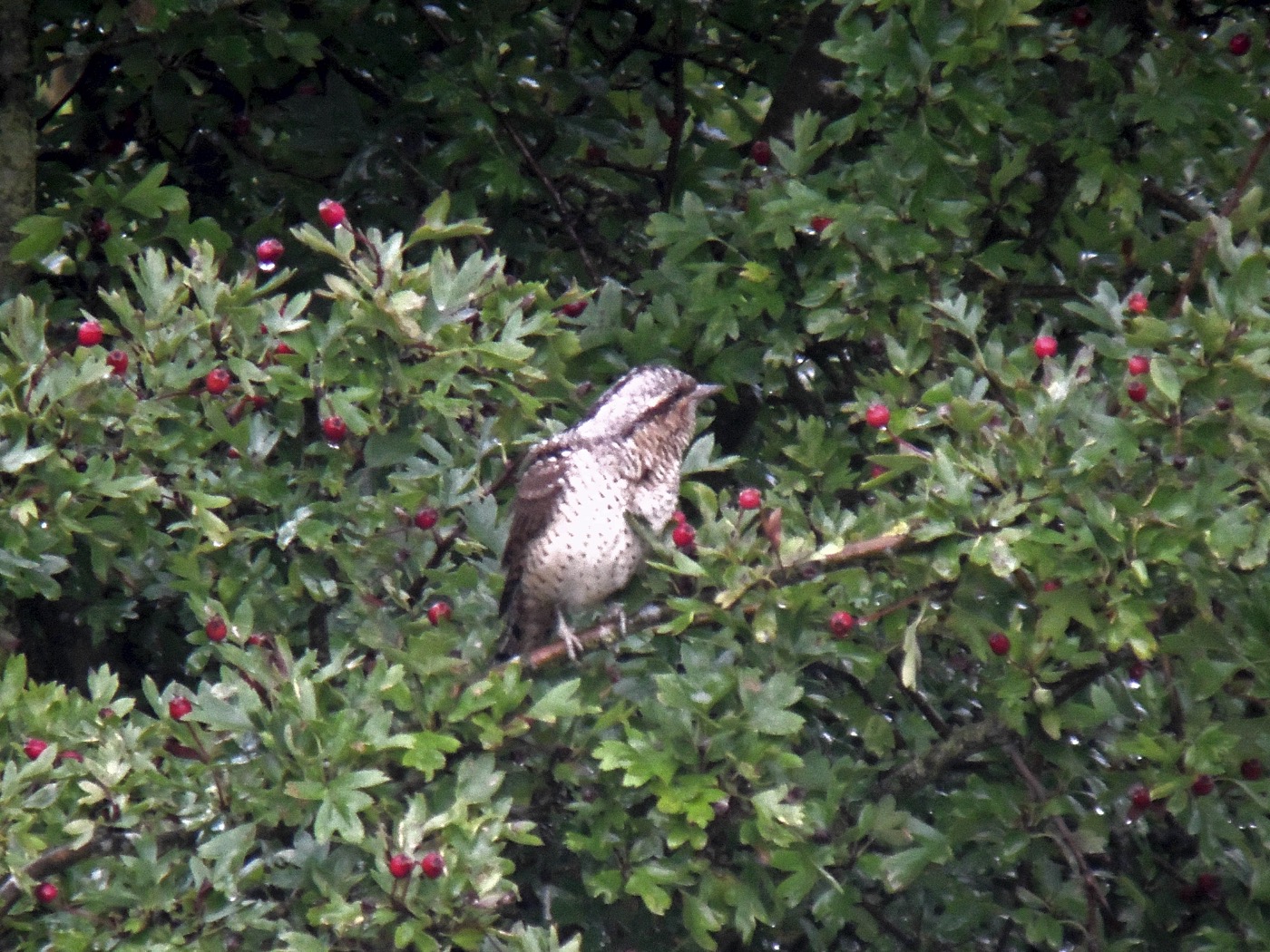
Eventually the bird I was there to see put in in an appearance. This was my first Wryneck, what a great bird. I watched it flitting between bushes and Hawthorn trees, occasionally dropping out of sight onto the ground. Once I was pleased with my views of the bird, I set about trying to get some record shots.

While the Wryneck was out of sight, I set up my digiscoping kit. To be honest I didn’t think this would be of much use as the bird was very mobile and trying to follow an active bird with digiscoping gear can be a frustrating exercise. The camera was going to be my best bet of achieving a record shot, but the bird was distant, light was poor and as it was a bank holiday, it was obviously raining. 
I had to push my camera well into digital zoom to achieve these record shots due to the distance involved. As record shots go, they are OK!
WryG3X01

WryG3X02

WryG3X03

WryG3X04
WryG3X

Then, the Wryneck disappeared for about 15 mins, when it again appeared it landed back in the Hawthorn tree, and just sat there. The digiscoping gear was set up. I lined it up, focused and the Wryneck was most obliging. 

WryneckP30001

WryneckP30002 jpg

WryneckP30003

WryneckP30004 jpg
I even managed to Videoscope some footage.


More than happy with my views and record shots of my first Wryneck, I started to think about packing the gear up when a Pied Flycatcher put in an appearance.
Pied Fly

One of the regulars told me that the previous evening, there had been at least 8 Common Redstarts in the same area. I was very impressed with this venue and it will be a place I will be visiting with some regularity in the future.