Showing posts with label novagrade. Show all posts

Saturday, 30 April 2016

Mixing it up

 It's been a week of messing about with different techniques to capture a few record shots of the local wildlife that I've been lucky enough to point a camera at.

It all started after work on Monday with a report of a Ring Ouzel! I rushed home from work for a change of clothes and to grab my binoculars and scope and was off. I located the Ring Ouzel, and the farmer upon whose land it was feeding gave me permission to cross his land to get a better view.

It remained distant and I didn't want to move it on by chasing it about so decided on using my scope and phone to capture a record shot.

Ring

Phonescoping again proving its value as a tool to keep in your armory for capturing pictures of a distant subject.

After enjoying the Phonescoping it encouraged me to set up my old Nikon P300 point and shoot camera and "Digidapter" made by Paul Sayegh. I decided to have a go capturing some images with my dedicated Digiscoping kit. I have been taking my scope out with me more often to scan the fields and hedgerows and thought it would make a change to use the little camera. If you are taking your scope, it’s nice to have an easy method of capturing what you are viewing if required.

Scopeb


 My Sunday morning wander about offered a few opportunities to put this set up through its paces. As with all my captures, I aim to get a record shot, but occasionally, if distances and conditions allow, I try for a "better" quality picture.

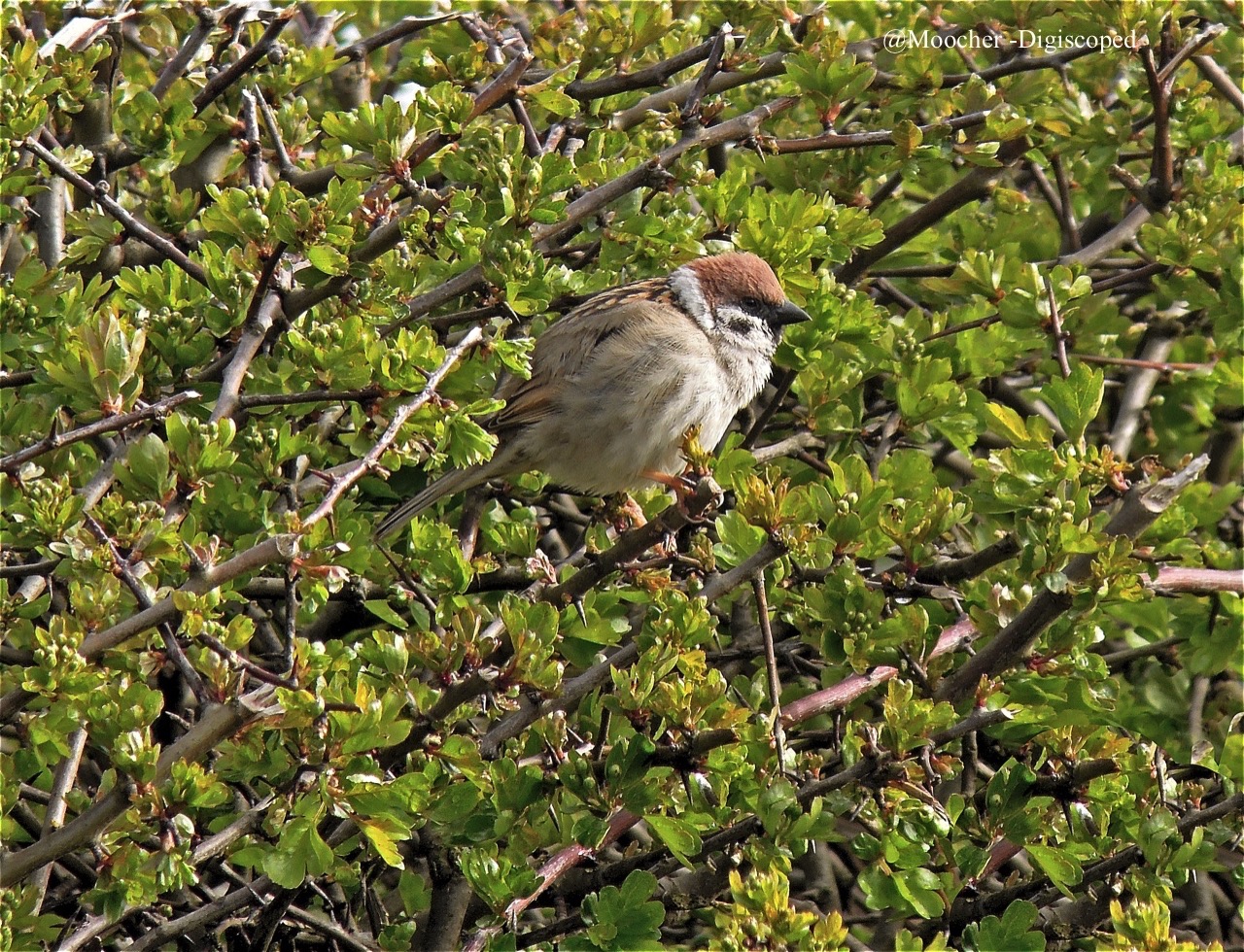
The Tree Sparrows and the Wheatear fall into the, just get a record shot category, the Corn Bunting is what I consider a better quality shot

Wheat

Tree

Corn

Also, one evening after work I took my Canon G3X bridge camera for a spin. Pete had told me he had seen a Fox hunting an area we sometimes check out and I decided to head that way. I couldn’t believe my luck when I also witnessed a well conditioned fox also hunting the very same area. It eventually realized it had an audience and disappeared. It was in too much cover to try for a picture but I found out what it was so interested in. The area has quite a healthy rat population and it obviously fancied one for supper.

Rat02

Rat2

A Pair of Grebe on the river also made for an interesting evening.

Grebe

I also managed to capture a local Hare on…….. film! That is still the word that springs to my mind, but what is the current accepted terminology? Captured on, photosensitive diodes, sensor, CCD, digitally? Film still sounds better to me. 

Hare

On top of that lot, I had a trail camera back in the area I picked the Otter up in last week, hoping it would again put in an appearance. No such luck though. However, Pete and I were again surprised at just how productive this clearing is when we checked the pictures to find another couple of surprises. 

We found the usual suspects we've been keeping an eye on.

Badgerpair

Foxday

The surprise visitors, a pair of Muntjac deer! 
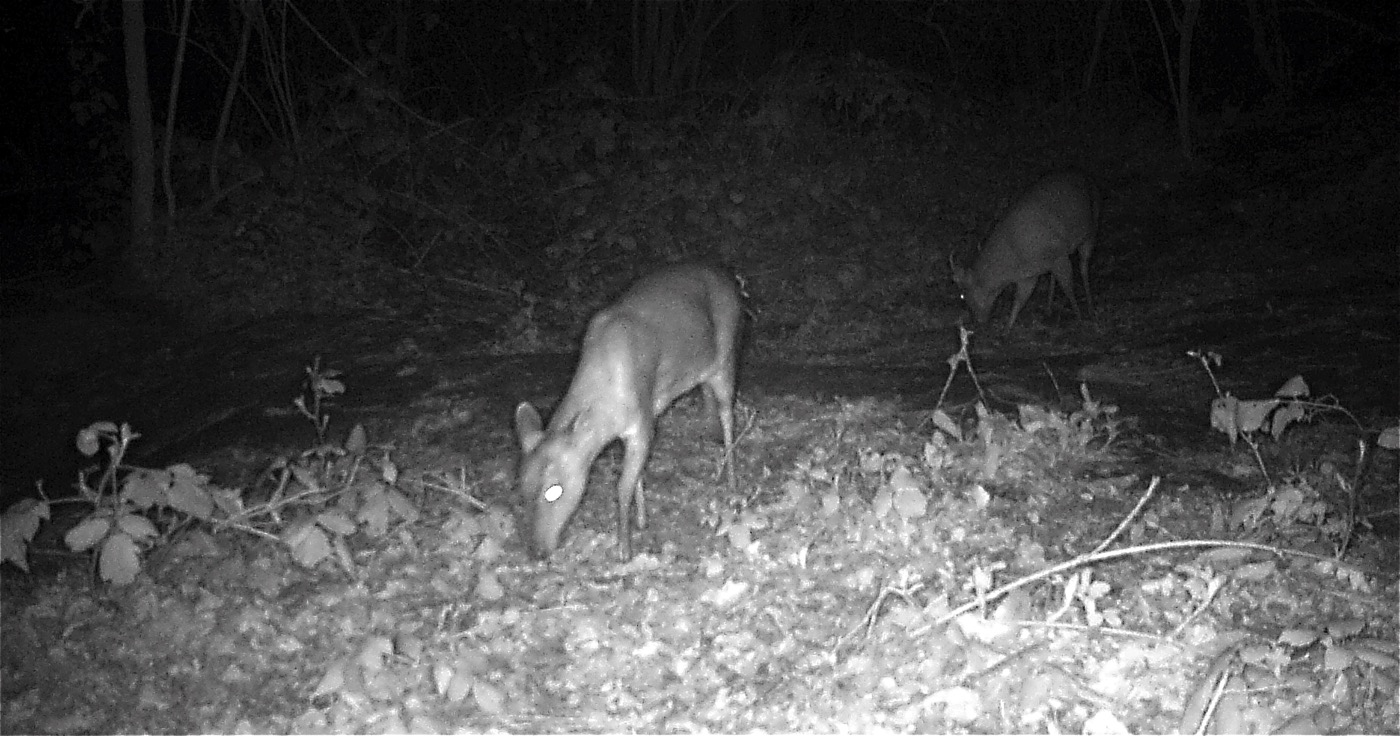
DeerPete and I enjoyed going through all the pictures on the trail camera, all 1680 of them. We even found the ideal location to carry this task out. This could become a regular thing!

Pint

Tuesday, 22 December 2015

The Hinksford Hoopoe

 It has long been an ambition of mine to see a UK Hoopoe. Even before my birding took on a more serious note there were three birds I really wanted to see; Hoopoe, Dartford Warbler and a Stone Curlew. I have now achieved that long standing target, although I never expected the Hoopoe to be a December tick!

This is the third Hoopoe I have intentionally tried to “twitch,” and the third time I have set out to see this particular Hoopoe. The first visit was three weeks ago in gale force winds. I was there at first light and hung on as long as I could, a duration of about five hours. It showed, about twenty minutes after my departure.

Visit two was last weekend, it was reported at 1.00pm and I arrived at about 2.30pm. I hoped it would show quickly as only around 90 minutes of light remained on what was already a very dull and rainy afternoon. One other birder was there and we were treated to an in flight glimpse as it passed over our heads. We were unable to relocate it. I was less than satisfied with my first Hoopoe sighting and had hoped for a picture, so Monday, the first day of my Xmas holiday; I was again in a reclaimed quarry in Wall Heath, hoping this Black Country loving Hoopoe would put in an appearance.

It did! and I was able to get a few record record shots too.

As usual, I had taken my camera and my spotting scope. My intention was to use the camera if the bird was particularly mobile, but if it allowed I could attach my phone to my scope and phonescope a few record shots. I don’t know why; after all this time phonescoping, that the quality of the pictures still surprises me.

It was early morning, overcast and very very dull. The camera even with its 1’ sensor required a high ISO to achieve anything like usable shutter speeds, especially at full zoom. I also had to go into the digital zoom range because of the distance involved to the subject; this also impacts on shutter speed and picture quality.

Now obviously the scope has a much greater optical reach than the camera and with the iPhone attached it did an admirable job. I am not sure how the phone operates as well as it does with low ISO in poor light, but on this occasion it definitely out performed the camera.

Results from the iPhone and Novagrade adapter 

Hoopoe phone 02


Hoopoe phone 01


Results from Camera

CanonHoopoe01

CanonHoopoe02

Sunday, 11 October 2015

Spoonbills at Middleton

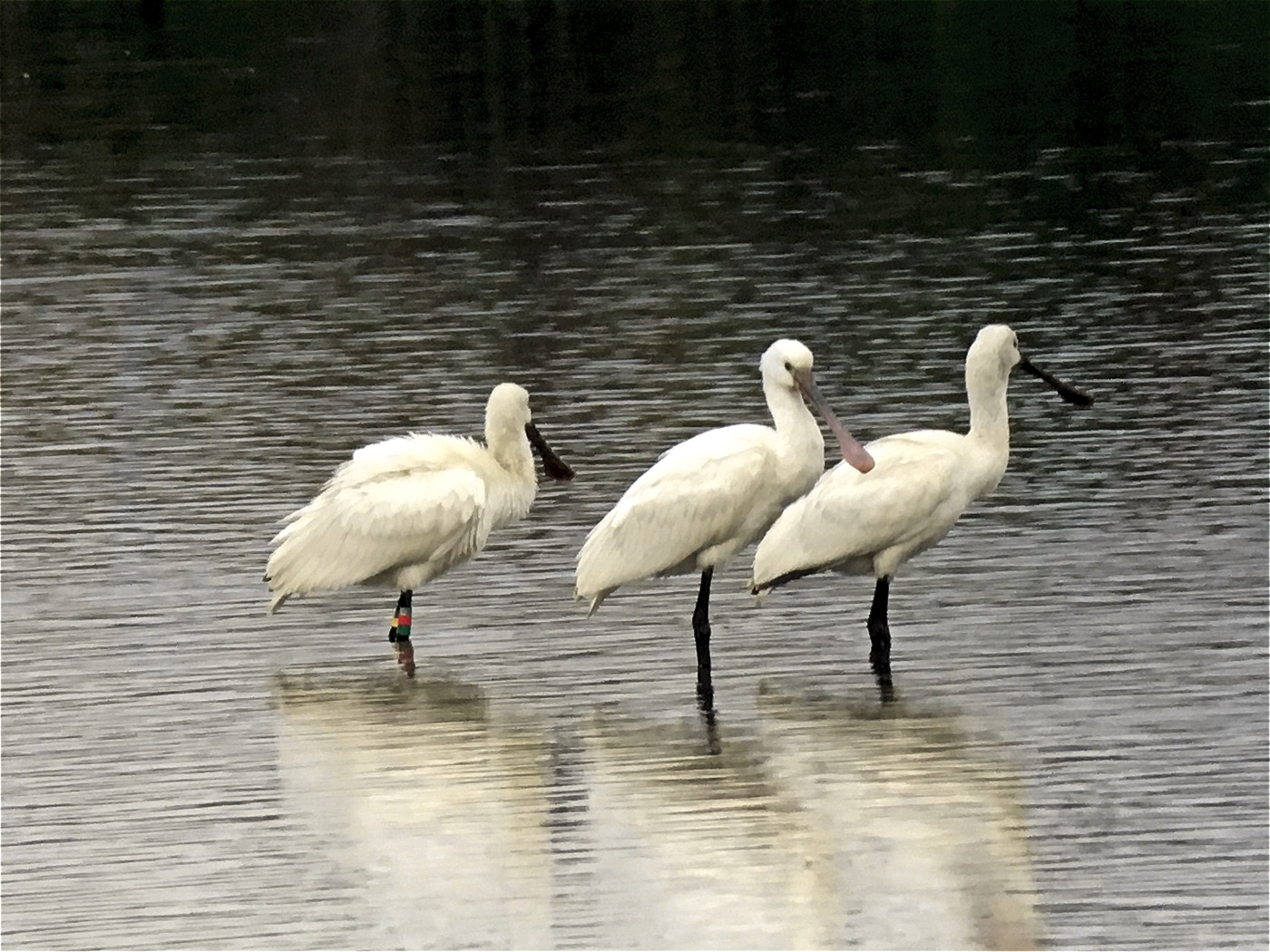
A tweet came through late Saturday afternoon reporting three Spoonbills at RSPB Middleton. Further information stated they were still there at last light. So, early Sunday morning Jon and I arrived at Middleton and with a few other early birders, were lucky enough to find the Spoonbills still resident.

We all attempted to get record shots on this dull start to the day with the early morning sun refusing to put in an appearance. My best record shots came from phonescoping the birds.

IMG 6989

A few of my record shots.

Spoon01

IMG 0145

Spoon03

Spoon04

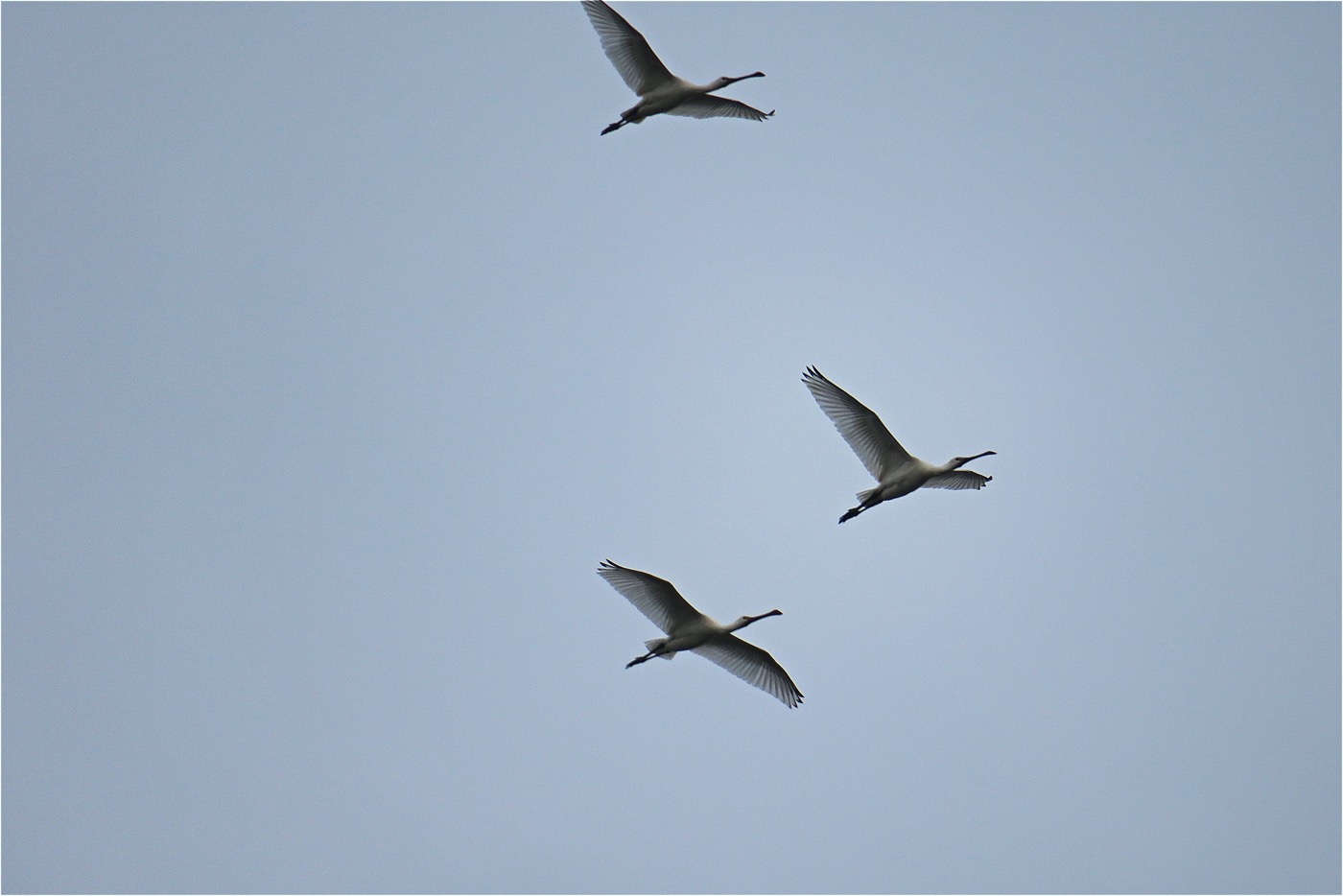
At around 8.20am, all three birds took flight and started to circle the Jubilee Wetlands. Slowly they started gaining height and eventually exited high, and in a North East direction.

I tried to capture this using the bridge camera.

Spoon07

Within minutes of the Spoonbills leaving, the sun put in an appearance and a couple of Long Horn cattle came over to check out what all the fuss had been about.

IMG 6990

Using the leg colour rings, the birds were relocated, arriving at Conwy RSPB, North Wales at 1.50pm.

Sunday, 23 August 2015

The hunt for a new walk about camera

I have for the last few years used a Canon SX40 Bridge camera as my main walk about camera when out birding. I have always been happy with this camera and it is still going strong, but I now feel the need to upgrade. This decision has meant a lot of internet research, in fact I have spent hours going through the various options open to me.

First and foremost I like to watch wildlife, photography is a secondary interest. I have over the years through trial and error discovered that when real distant shots in difficult conditions are required, I can usually get better results using my Scope and either phone or digiscoping my target. Now if I go on a twitch or just out for a full days birding, my scope is always with me and so is my phone, so extreme distance photography is covered. So now, my requirements for a walkabout camera are a little different. 

Extreme Distance I Digiscope

Approx 400 yards - Good Light.

Spoon


Approx 350-400 Yards Poor Light.

Crane04

300+ Yards - Very Poor light but still a heat haze.

Osprey

Although I haven’t included them the results from my SX40 Bridge camera did not compare to the above digiscoped pictures. So, I have distant record shots covered.

I now want a camera that can cover from macro to middle distance and although photography is a secondary interest, the quality of the pictures I take is becoming more important to me. Many times recently I have seen the opportunity for an interesting picture, but because the light is poor and knowing my small sensor SX40 bridge camera will struggle to give me a picture of reasonable quality as it will need a high ISO, I don’t even attempt the shot. So, I want a camera that will perform a bit better in lower light situations and still give me reasonable reach. 

Such a camera has been released. Canon has just released its 1” Sensor G3X with an equivalent 600mm (25x) Lens. It hasn’t got the reach of the small sensor cameras with some like the Nikon P900 sporting a 2000mm lens, but with a sensor 4 times the size and 20MP the image quality should be good. It has its negatives, it doesn’t come with an electronic viewfinder. Now a lot of the forums contain photographers down crying this camera for that. I must admit, it’s an expensive camera and I would have liked to have seen one on the camera as standard. However, Canon’s electronic EVF can be purchased and used separately if required. That does however bump up the cost. I gave this some thought and considered my own camera use at the moment with the Canon  SX40. To be honest the EVF is so poor on this camera, I very rarely use it. I have learnt to use the display screen for my photography. 

I weighed up the Pros and Cons and decided I would bite the bullet and go for this camera. A purchase was made.

Canon G3X hero 745  

I still want to stay with a Bridge Camera format due to their versatility without having to carry and swap lenses in the field.

My Efforts with the Canon G3X

So first of all I tried a bit of Macro. 

IMG 1513

IMG 2857

Cornfull

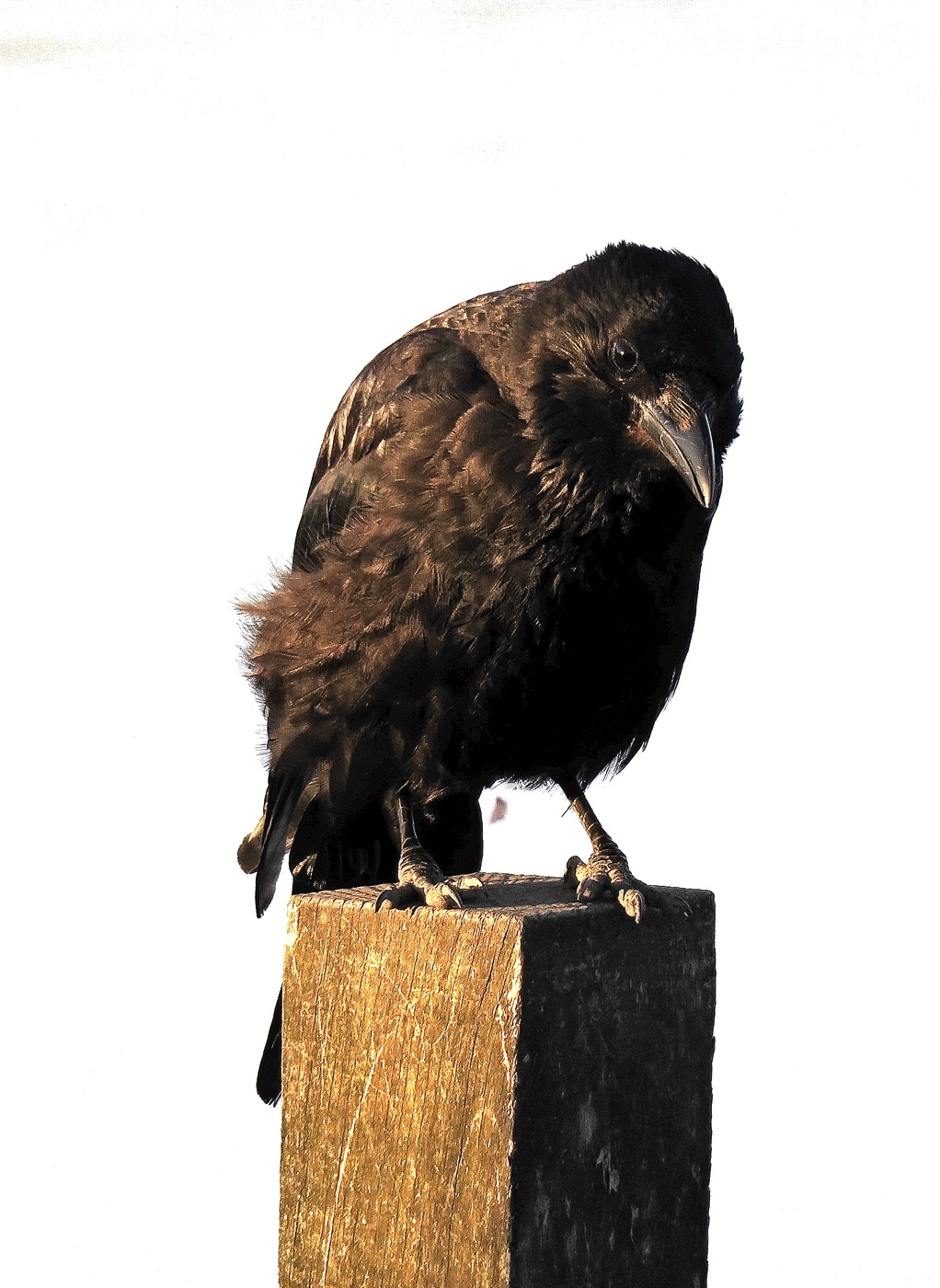
Then some at the extreme end of the lens 600mm

Crow

IMG 2974

IMG 1711

IMG 2227

IMG 2988

IMG 0396


Now I am very happy with the quality of these pictures. However, I did have the lens give a lens error message and close twice in the the three days I had the camera. I also noticed that at the extreme of the lens there was a difference in quality in the photographs of the same subject. I believe that there was a fault with the camera and returned it.

However, the more I think about it and go over the pictures I took with it, the more I think I should get a second one and give it another go. I had the same issue with my first SX40 and returned it. The replacement is still producing the goods today. I will give it some more thought. I must say though that the camera build really impressed me, and if the first model had a problem and I can get a perfect model, this could be exactly the camera I am looking for. 

Monday, 13 July 2015

Red-Footed Falcon Staffordshire

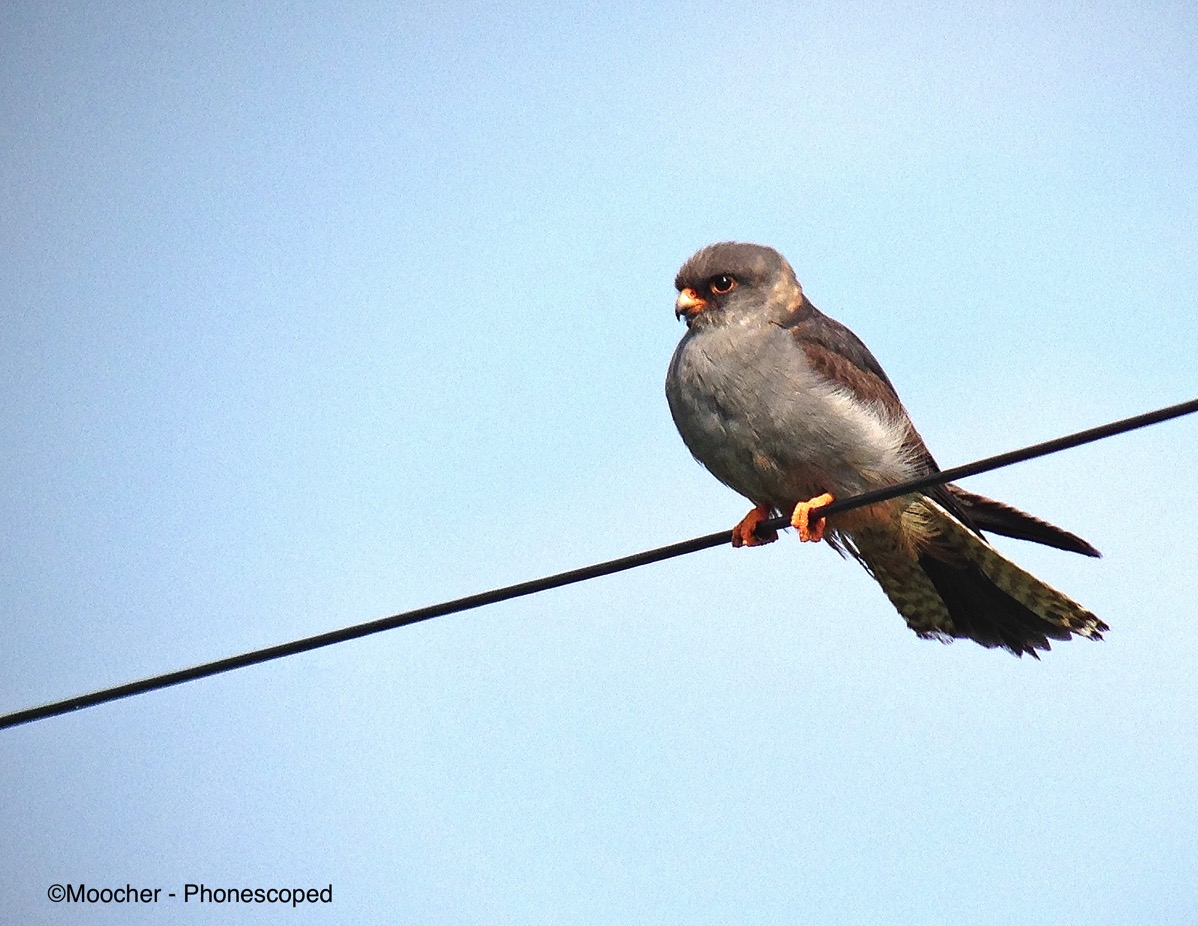
When a Red-footed falcon was reported at Chatterley Whitfield, Stoke on Trent on Thursday the 9th of July, I was interested. When it was still being reported on Sunday the 12th and considering some of the excellent pictures I had seen of this gorgeous falcon, I couldn't resist it anymore and set off to check it out myself.

I took the new Novagrade Standard smartphone adapter with me intending to put it through its paces "in the field," so to speak.

The bird gave great views coming close enough to delight all the photographers. The only sound to be heard whenever the bird moved was a barrage of rapidly firing shutters from behind the artillery battery of massive lenses. I set up my iPhone5 on the universal adapter, pointed my scope in the same direction as the other lenses and attempted to get some record shots myself.

IMG 9952
 
IMG 0213
 
IMG 0303
 
IMG 0331
 
IMG 9739
 
IMG 9741
 
IMG 9592
 
 
 A very enjoyable Sunday afternoon, with a bonus Black Redstart thrown in for good measure. Incidentally, this was my first Black Redstart, it's one of my "If you had been here 5 minutes earlier......" Birds.

Monday, 29 June 2015

Birding record Shots

Monday and the new “Standard" Adapter from Novagrade arrived by post. I couldn’t wait to try it out so as soon as I got home from work I set the Standard adapter up to take my iphone 5 and set off to use it. The first observation other than it isn’t quite as pocketable as the original “Compact” version is that the Standard adapter is much quicker to set up to take any phone in its everyday hardcase. The Standard Adapter will also accommodate the larger sized smartphones such as the iphone 6 and HTC One M8 with ease. It looks like it would probably accept phones the size of the iPhone 6+, but I don’t have one at hand to try.

The differences in appearance.

The Original Compact Novagrade Adapter.

IMG 1901

Compact Plus Phone

IMG 1903

The New “Standard” Novagrade Adapter.

IMG 1896

The “Standard plus Phone.

IMG 1898

A big plus point with the Standard Adapter is that as well as being far less fiddly to initially set up, it grips the phone much further down the sides of its body, this reduces accidental depression of side buttons that sometimes occurs with the iPhone and the compact adapter. It can be resolved by sorting through the assortment of grippers that come with the compact version, but the problem doesn’t present itself at all with the new Standard version.

The size difference is only in the arm extension and gripping mechanism. The main eyepiece component is the same size.

IMG 1911

So, with the Standard adapter set up I headed for the Corn Buntings I mentioned last week. They don’t allow you to get too close without making a quick exit, so this was an ideal opportunity to phonescope.  If anything, conditions were too bright and the heat haze was also an issue, I am still pleased with these results though.

Corn Bunting

I also managed some HD Video footage using the phone and Standard adapter. For best viewing, make sure it is playing in HD, You tube often selects lower resolution playback as default.

All in all, I think the Novagrade’s maiden voyage was a success. It was very easy to attach the adapter to the eyepiece, very quick and easy to snap the phone into place, and although this was my first time out using this adapter, no issues became apparent. I will update this information with further use of the new adapter.