Sunday, 14 June 2015

Twists of Fate

The Middleton Avocets caused a few raised eyebrows when two of the chicks appeared on the Jubilee Wetland area, around 500 meters from where they hatched. As they can’t fly yet, they obviously walked and it must of been a bit of a trek for them. One remained on the North pit, causing the parent birds a few issues, but eventually, a day later, all three ended up on the Jubilee Wetland area. It does seem that one of the initial four chicks has not made it to this stage and it wasn’t the smallest last to hatch chick that has gone missing either but one of the larger ones.

The remaining chicks are growing fast and already starting to look like the adults.

YAvocet

AvocetY

Ringed and Little Ringed Plover seem to be thriving at Middleton and can be seen rapidly scurrying about on most of the scrapes.

Little Ringed

LittleRP2

Ringed Plover

Friday evening I braved the threat of heavy rain and headed for Cannock Chase to look for some Long Eared Owls I had been told about. The directions I had been given were excellent and after a short wait, an adult Long Eared Owl put in an appearance flying low over the Heather and disappearing from view. From the small woodland it had emerged from came the high pitched squeaking of its young and soon two Long Eared Owl chicks also flew from the woodland, but they landed on a low branch of a tree and started preening and calling to the parent birds. The light was fading fast and it was raining. I tried to get a few record shots with my digiscoping camera, but it was struggling in the gloom. In desperation for a decent record shot, I attempted to hand hold my iPhone to the eyepiece of my scope, this achieved the best pictures of the young Owls.

LEO

IMG 2713

This is my first ever sighting of Long Eared Owls, so I really wanted a record of it. The phone again proved its worth in the field!

This was the start of a great evening. The first adult I had seen returned and coaxed the young to follow it. They didn’t need much persuasion and soon all three were out of sight. I hung around for another 10 minutes and did get occasional glimpses of them in flight.

I moved on from here and was soon watching Woodcock fly overhead and getting the best views of Nightjar I have ever had. The rain then became heavier and reluctantly, I headed back to the car. It rained for the next 15 hours!

The rain brought the rivers up rapidly and Middleton was soon suffering from rising water levels. A second Avocet nest that a few regulars had been keeping an eye on became a casualty of the rising water with reports that the parents had abandoned the nest on Saturday, a day before the eggs were expected to hatch. Sad news indeed.

Then, on Sunday a report came through that it seems two of the eggs had indeed hatched, and two chicks from this second nest had been seen, what great news. I hope after such a tough start lady luck smiles on these latest chicks and they catch a few breaks in the survival stakes. 

Saturday, 30 May 2015

Local Breeding Avocets - A Few Pictures

I had managed to see the three (when I first visited) Avocet chicks the day after they hatched, but had not managed to get pictures. About 10 days later I returned with my Digiscoping gear hoping to get some pictures of Staffordshire's first recorded Avocet chicks. Since my initial visit another chick had hatched and I was pleased to see all four were still present and correct.

The fourth chick is noticeably smaller than the other three, but seems perfectly healthy. It was causing the parent birds to work hard by wandering off away from the other chicks and feeding on its own. This caused the parent birds to split their attention between the group and the inquisitive individual. They are doing a sterling job of protecting the young and while I was there drove off a Lesser Black Backed Gull and a Carrion Crow that didn't actually venture that close to the chicks, then they accosted a Shelduck that inadvertantley did.


Eventually, I managed to drag myself away from the "Lookout" hide and on the way back to the car stopped to digiscope this singing Whitethroat. Another enjoyable visit.


Saturday, 23 May 2015

Local Surprises

The first surprise, well not really a surprise as I knew the proposed date of this event, but the surprise was in the fact that this time the promised date delivered the goods ......... The long awaited bridge over the river Tame joining the Dosthill and Middleton sides of the RSPB reserve opened for public use. I enjoyed my first walk across on Sunday morning. 


The next surprise was news on Tuesday 19th May, of the first successful breeding of Avocets in Staffordshire, right on our doorstep at Middleton RSPB. Great news and I went straight from work on Wednesday to see these history making Avocets and chicks for myself. I was very pleased to get reasonable views of them. I hope they survive and look forward to future photo opportunities and ultimately more breeding Avocets at Middleton. 


Surprise number three! A local walk in an area I had almost forgotten about produced some interesting results. Pete had been looking at Ordnance survey maps in an effort to find some local areas we may have overlooked. He had identified some areas of interest and Saturday morning we set off to have a look around. Now it is possible to Customise your own Ordnance survey map, it's never been easier to find interesting areas radiating out from the central starting point of your choice. 


The area in question was pretty much as I remembered it until we ventured off the main paths following a route Pete had picked out on the Ordnance map, and started walking through areas new to both of us. 

There was an abundance of Herring Gulls and Crows in the area, and then scanning the fields my first local Hare of the year was seen crossing through a crop in front of us. Then, in the same field a large Vixen appeared, her coat was very light, almost blonde in fact. One I will definitely recognise if our paths cross again. Unfortunally, I didn't manage pictures of either. 

A bit further along our route and Pete stopped, lifted his binoculars to check what he obviously suspected and then confirmed he had just seen a local Tree Sparrow. They can be a bit thin on the ground around these parts. 

We were soon both watching a few Tree Sparrows, and I quickly counted about thirteen. As we moved further along the route it became apparent that there was even more Tree Sparrows than I had first though. We spent a good while watching the antics of these Chestnut headed beauties. I will be keeping a regular eye on this breeding Tree Sparrow colony and monitoring their progress with interest. 

Friday, 15 May 2015

Derby Cathedral's Peregrine Falcons

I have mentioned this fascinating project before on my blog and cannot resist calling in on Derby Cathedral to visit these magnificent birds whenever I’m in the vicinity. I have like many been keeping tabs on the progress of this years nest activity via the webcam stream and read that on Friday the 8th May, the third of four eggs laid had hatched. I was visiting the area in the next few days, so arranged to call in.

If you don’t already check out the nest activity from time to time on the live webcams, go the excellent Derby peregrines Blog by clicking their logo image below. 

Perigrineproject

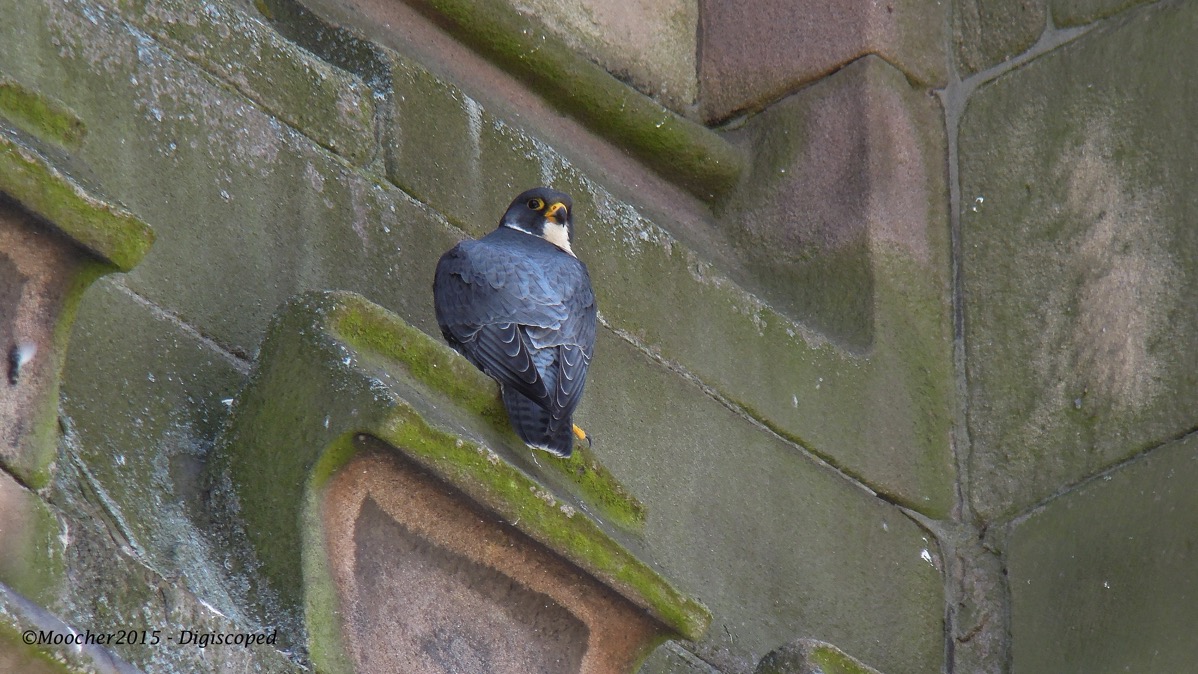
I did manage to pay a flying visit, but the birds were far too busy with three fledglings to entertain me. I hung around for a while and was eventually rewarded with a brief view of the pair as a nest change over took place. One of the Peregrines disappeared from view as it took up its position with the chicks on the platform, the other perched on the edge of one of the decoratively carved sandstones and enjoyed a short break from parenting duties. I took this opportunity to grab a few pictures.

I wanted to experiment with my old Canon SX40 bridge camera hand held and my Nikon P300 attached to my scope and compare the results. 

It’s a fair way up to the nest platform and perching Peregrine from my vantage point.

Cathe

The wind was also strong and gusting, so vibration of the equipment was a constant issue. I started with the Canon SX40 Bridge camera handheld.

Peri01CAN

Peri02CAN

Hand held in a strong wind, these turned out better than I expected.

I then switched to the digiscoping set-up using the Nikon P300.

PeriNIKON01

PeriNIKON02

Comparing the pictures, there isn’t really much in it. I would say the Digiscoped results are a little sharper, but they were taken with the equipment mounted on a good sturdy tripod. 

My old Bridge camera has surprised me with what it has achieved hand held. Bridge cameras have come on a lot since this one ruled the roost. I think this has convinced me there is still a place in my birding for a bridge camera to record my sightings. It’s time for an upgrade. 

I will be visiting the Derby Cathedral Peregrines again soon probably when the young are nearing fledging around June time and I hope to have a new Bridge camera with me to capture the action. Until then, I will be keeping up with day to day developments at the nest via the BLOG and the webcams. 

If you are interested in seeing the Peregrines for yourself and getting some good views, Watchpoint events are held on Saturday mornings beginning sometime in May. Details can be found here - Watchpoint. There are usually spotting scopes you can look through to get good views of the birds and the nesting platform. Why not make a day of it and if you can, make a donation to this great project.

Saturday, 9 May 2015

Camera Dilemma

I'm not sure what to do at the moment. I really enjoy digiscoping and I am slowly getting to grips with the Nikon P300 I am using. My idea was that once I had mastered the camera I would upgrade to the Nikon P330 or P340. I have also been experimenting with video capture through the scope with the P300 and it does a very acceptable job. I've even tried some close up macro photography with this little camera.

Persevering with some digiscoping, my first Garden Warbler of the year.

However, there are times when digiscoping can be difficult, such as trying to capture small fast moving birds. In these situations a hand held camera is definitely easier. Also, a good bridge camera is excellent for record shots. There are times when you don't want to cart the scope and tripod about, but just enjoy a wander with the binoculars. This is where a bridge camera comes into its own if you encounter something unexpected or a good photo opportunity presents itself. I have had a Canon SX40 since they were released and have really enjoyed using it. From Macro, landscape to telephoto it has been a pleasure to use and I am pleased with the results I have achieved and some of the record shots I have recorded using it.

Now Nikon have produced the new "King" of the compact zoom bridge cameras in the shape of the Nikon P900 with its incredible 83x optical zoom. A camera that on the face of it is a must have for birders. It seems to have proved very popular with UK birders since its release and seems to currently be sold out everywhere!!


I reminded myself how useful a bridge camera is this morning and took my old SX40 out on my walk. The light was poor and the morning very overcast, not good for any type of photography really, especially digiscoping. Even in the poor light at distances of around 40 yards I managed these shots. High ISO, a little noisy, but acceptable nevertheless?


The Bridge camera is also nice to just use as a camera to snap away at anything that takes your interest.

So what to do? I may just stick with my Phone and Nikon P300 for digiscoping and upgrade my bridge camera to the Nikon P900. But my mind changes by the hour. Back to reading reviews by photographers who have managed to purchase one and see what the consensus of opinion is.

Out Sunday morning and I again took the Canon SX40, managed these shots of a Grey Wagtail.

The SX40 may have been superseded as bridge camera technology goes by several models now, but it's still a great walk about camera.


Saturday, 18 April 2015

Local birding hots up.

Spring migration at last came to the patches I like to call my own. Pete and I walked the Moors last Saturday scanning the ploughed fields for Wheatear. No luck there, but Pete picked up a nice male Redstart. It was distant and not allowing us to get any nearer than we were. I tried with the bridge camera, but results were poor.

I went back in the afternoon to see if he was still in the same stretch of hedgerow, he was and I could also hear a second Redstart calling. I tried with the scope and phone to get a record shot.

He was still in residence on Sunday morning, and on Monday, Pete saw two Redstart.

Tuesday evening after work I went for a quick stroll and this time found a Wheatear on the patch.

Pete saw another on Wednesday. I was too busy to get out again in the week.

Today I went out early and had a quick walk around a local lake, I recorded my first Arctic Tern of the year. Home for a quick cuppa then Pete and I again took our Saturday morning walk around the patch. Pete had already had Blackcap in the week, but I was yet to see one. He took me to the area he had seen one in the week and sure enough we soon heard the teck-teck-teck and chattering of a Blackcap. It soon gave good views of itself and my first spring Blackcap was ticked.

Moments later a report came through of Two Black-Winged Stilts at RSPB Middleton. I hoped to make it to see them later in the day. Pete and I finished our walk and I made a few phone calls to see if I could rearrange my day. Everything went to plan and I was on my way.

What a gorgeous pair of birds they were and I spent a good while just enjoying viewing them before attempting to get any record shots. They never came really close while I was there, but I did use the phone through the scope to get some record shots and a short video.

Sometimes video from YouTube won't play in HD via my blog, if the video is poor quality, try this direct link Black- Winged Stilt

These are the first recorded in the Tame Valley since 1987. I'm hoping there is more to come, a patch Ring Ouzle would be great, doubtful, but fingers crossed.

I spent the afternoon setting up the Digidapter again for the Nikon P300 as I had readjusted it to experiment with another camera. I really took my time getting everything lined up before tightening it all down. A Dunnock sat on top of a tree in the garden enjoying the sunshine and I used it as a test subject. I will be out with this set up in the morning.


Thursday, 9 April 2015

Back to the Beginning

I decided to go back to where my interest in digiscoping was really triggered and that was Phonescoping. I had prior to this dabbled with digiscoping using a camera with very mixed results with the usual outcome being disappointment. I eventually gave it up as a bad job. The phonescoping started when I one day hand held my iPhone to the eyepiece of my scope to get a record shot of something I was looking at, the results surprised me and were much better than anything I had managed with my previous attempts using a camera to digiscope. I decided to take this further.

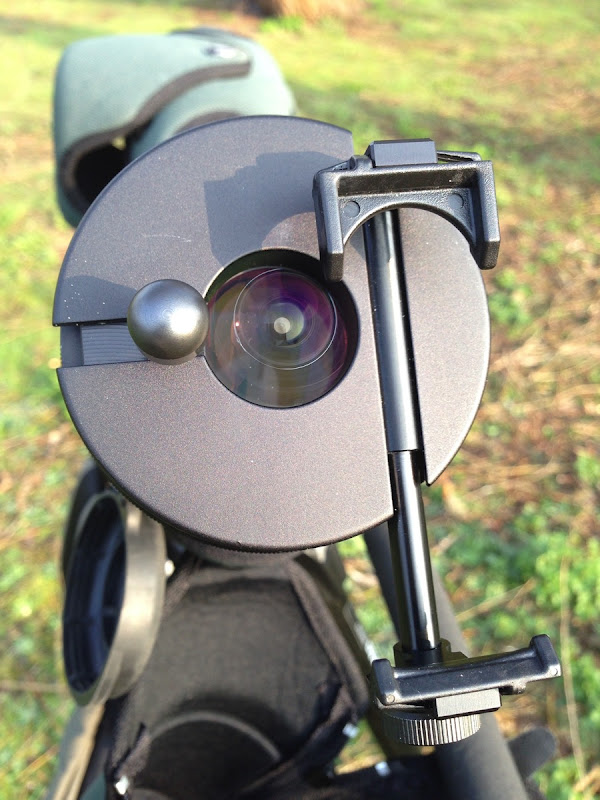
I made a couple of homemade adapters but they were not very robust and eventually fell apart, usually at the most inconvenient of times. I purchased a couple of adapters but didn’t get on with them for a variety of reasons. Then, I stumbled upon the Novagrade Adapter and never looked back. I cannot recommend this universal phonescoping adapter enough, it will adjust to fit most phones and scope eyepieces and only needs setting up once. Before you ask, I receive no financial gain from Novagrade adapters and purchased mine with my own hard earned. I recommend them purely based on my experience using one in the field on a regular basis for around the last 12 months.

Here is the Novagrade Adapter attached to my eyepiece.

IMG 7618

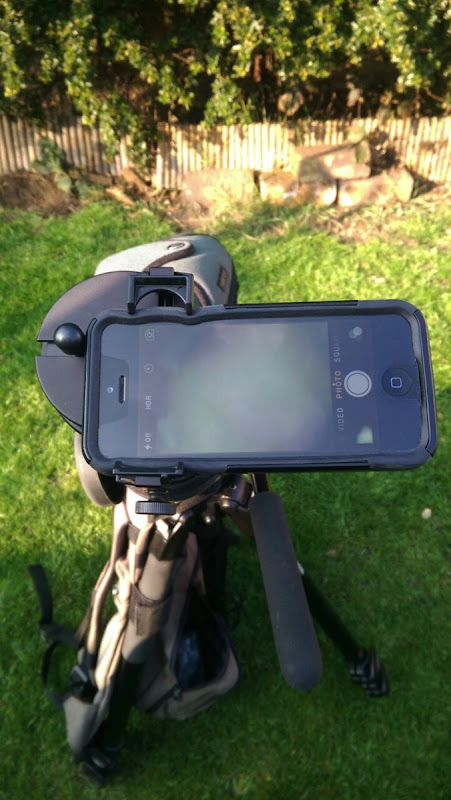
What many people don’t realise is, with most smartphone adapters you have to keep your phone in a dedicated phone case that attaches to the eyepiece adapter. This IS NOT the case with the Novagrade Adapter. You use your phone in its everyday protective case, straight out of your pocket. No swapping phone cases to go phonescoping. To me, this is massive plus point.

Then I just snap my phone into place, still in its everyday protective case.

IMG 7838

If you look back at my blog you will see I took some pictures I was very pleased with using this set-up. Then, I decided to try my hand at camera digiscoping again. I have been more successful this time around and enjoy using the camera, a Nikon P300 to digiscope with.

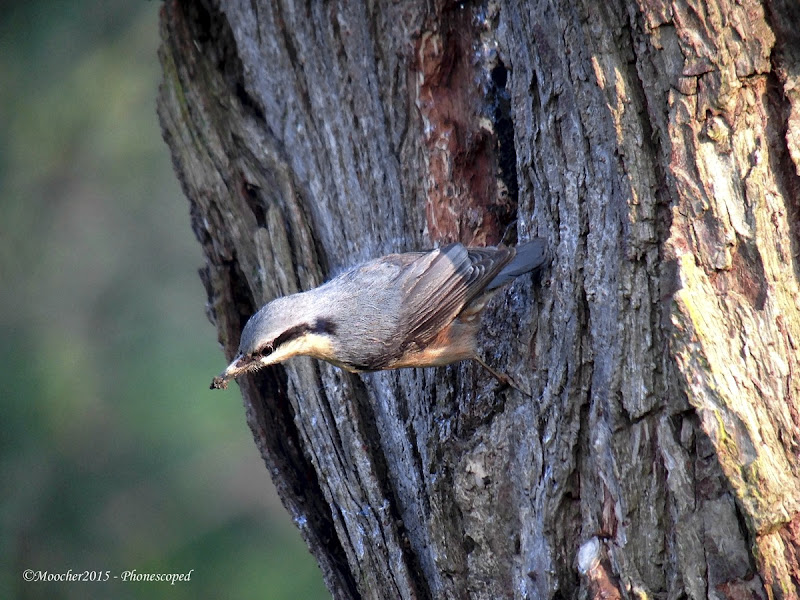
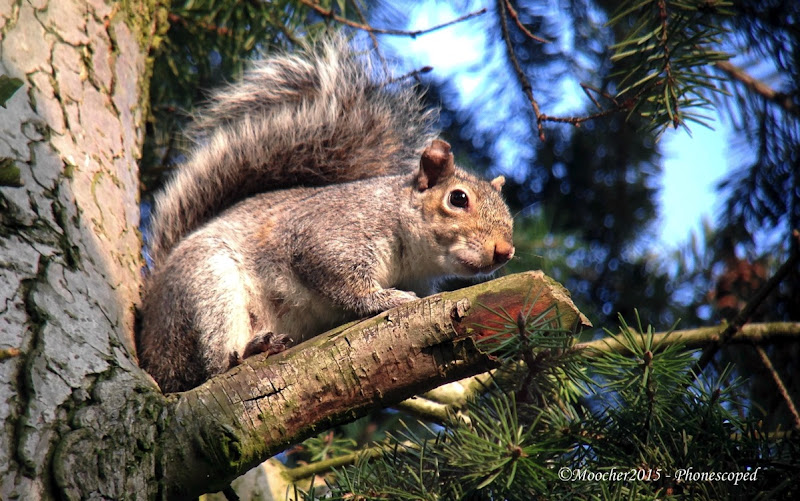
So, as I mentioned in my opening lines, today I removed the camera adapter from my scope and decided to go out with the Novagrade Adapter, I had forgotten just how much fun this style of digiscoping is, I had an enjoyable few hours this morning and again this afternoon. I have taken some pictures I am really pleased with and include some of them here.

From this morning.

Grey

Nuthatch

Nut

Woodie

Squirrel

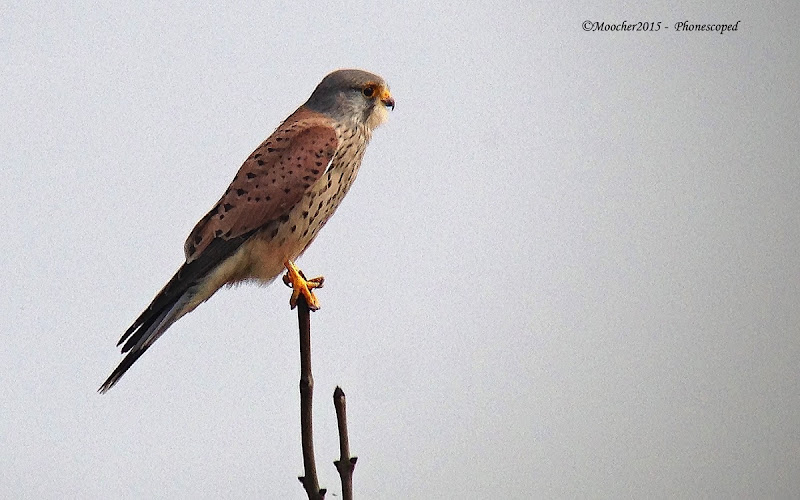
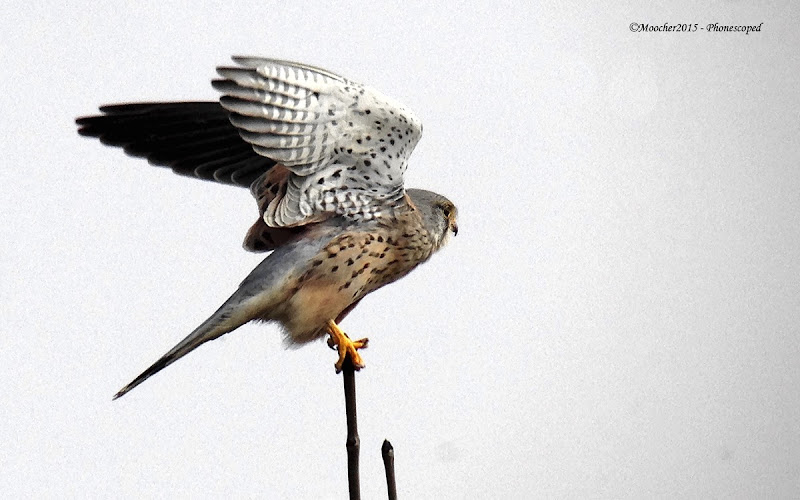
And a few from this afternoon.

Kestrel

Kez

Blue

I feel these may well be some of the best digiscoped pictures I have taken this year, and all with my phone, I also had a lot of fun doing it.

Now I want to try a different smartphone, just to see how I get on with something other than an iPhone. It will give me the opportunity to show how the Novagrade Adapter adjusts for different phones. Mrs Moocher has a HTC One M8 phone its much bigger than my iPhone 5. I want to take it digiscoping! She seems reluctant to let it out of her sight, so the digiscoping will either be a bit of back garden birding or, I will convince her to come birding and obviously bring her phone along. Looking forward to this.